
Quick Answer: Do You Need an Electrical Permit in Montana?
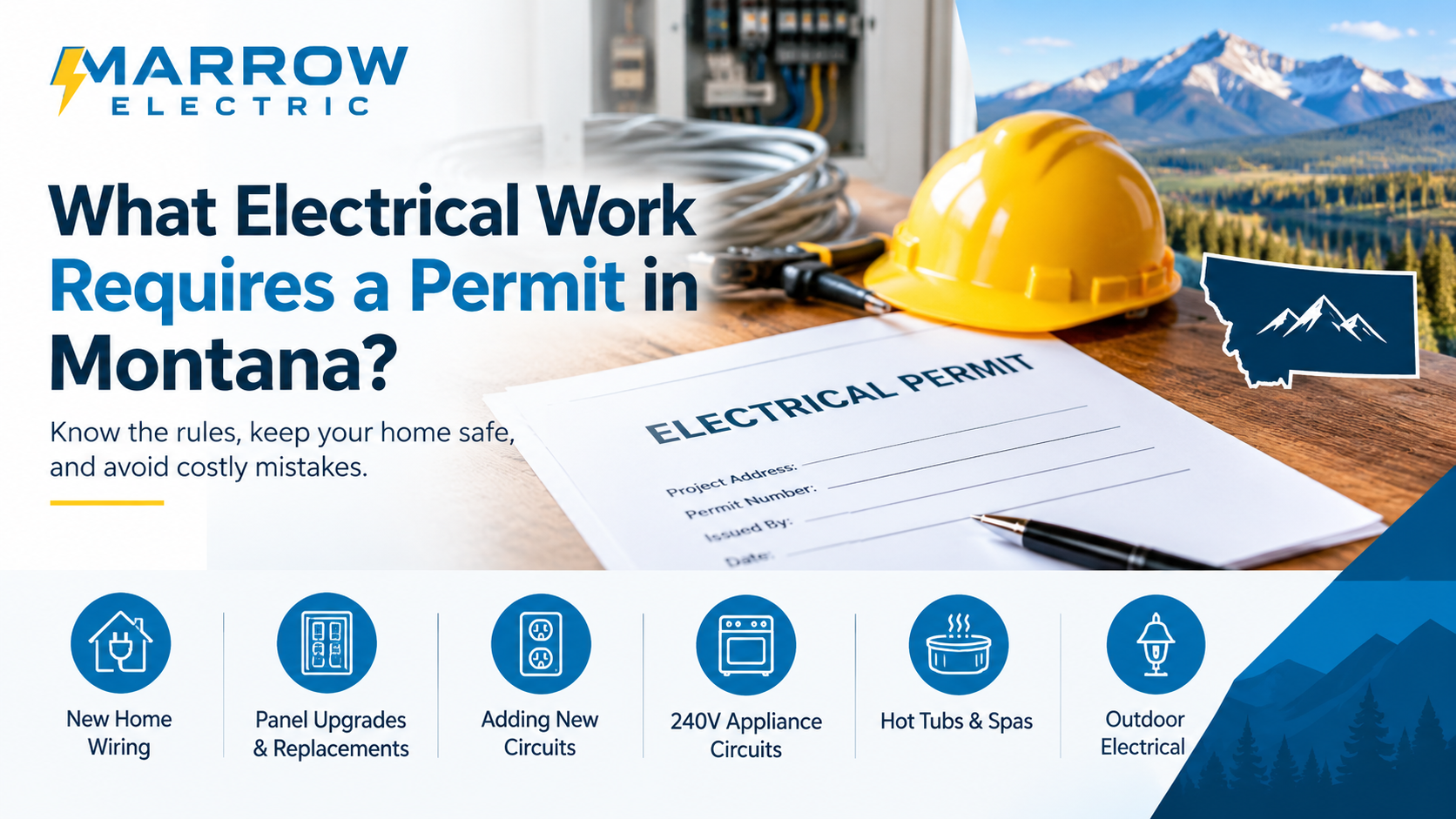
In most cases, yes. In Montana, an electrical permit is generally required for new electrical installations, remodeling and alterations, major repairs to hardwired systems, new fixtures and equipment, and service or panel upgrades. Minor repairs and like-for-like replacements may be exempt, and homeowners can sometimes do their own work on a home they live in, but a homeowner permit and inspections still apply. The safest move before any project is to confirm with the permitting authority for your address, or to hire a licensed electrician who handles the permit for you.
That short answer is accurate, but the details are what protect your home, your insurance coverage and your resale value. This guide breaks down exactly which projects need a permit, which usually do not, how the process works, what inspections look like, and what can go wrong if you skip it. If you live in Missoula, Florence, Stevensville, Hamilton or anywhere in the Bitterroot Valley, you will also find local notes along the way. If you would rather talk to a person first, you can contact Marrow Electric and we will point you in the right direction.
Why Montana Requires Electrical Permits
Electrical permits exist for one reason: safety. Wiring that is hidden inside walls, ceilings and panels cannot be judged by a quick look, and mistakes in it are a leading cause of residential fires and shock injuries. A permit creates a record of the work and triggers an inspection by someone with no stake in the job other than making sure it meets code.
Montana adopts the National Electrical Code (NEC) with state amendments, and the permit system is how that code is enforced in the real world. Each time a permit is issued and inspected, a trained inspector verifies wire sizing, grounding, bonding, breaker protection and workmanship. If you want a plain-language look at the hazards inspectors are trained to catch, our guide on home electrical safety problems to check covers the most common ones.
Permits also protect the next owner. When a house is sold, buyers, lenders and home inspectors often ask whether past electrical work was permitted. A clean paper trail makes that conversation easy, while a mystery addition or an unpermitted panel swap can stall a closing.
Who Issues Electrical Permits in Montana?
The Montana Department of Labor & Industry, through its Building Codes Division, administers electrical permits statewide. Licensed contractors and qualifying property owners apply through the state’s permit process, and state electrical inspectors perform inspections in much of the state.
However, some cities and counties operate their own certified building programs. In those jurisdictions, permits and inspections may be handled locally, and fee structures, application steps and inspection scheduling can differ from the state’s process. This is why two neighbors on opposite sides of a city line can have slightly different experiences with the same project.
The practical takeaway is simple: always confirm which office covers your address before you start. If you are inside a certified local jurisdiction, ask the local building department. If you are in an area served by the state, apply through the state. A licensed electrician who works in your area every week already knows which path applies, and you can see the range of work we handle on our electrical services page.
Electrical Work That Requires a Permit in Montana
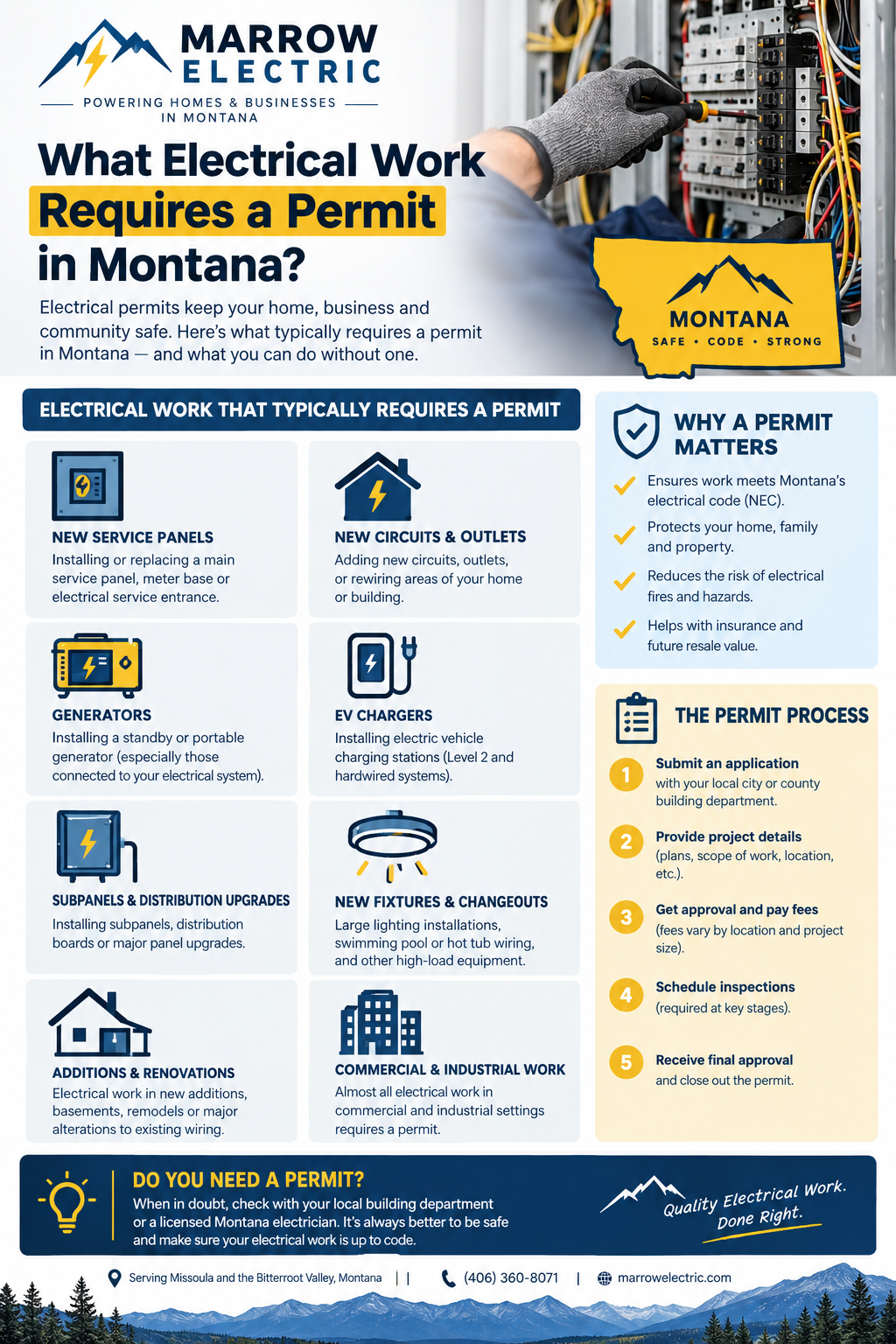
The categories below reflect the way Montana permits are generally structured: new work, changes to existing systems, new equipment and fixtures, and service-level changes. If your project fits any of these, plan on a permit.
1. New Construction
Any time you install electrical wiring or hardwired systems in a brand-new residential or commercial building, a permit is required. That includes the service entrance, the panel, every branch circuit, receptacles, switches, lighting, and the connections to appliances and mechanical equipment. New construction typically involves multiple inspections, such as a rough-in inspection before walls are closed and a final inspection once devices and fixtures are in place.
If you are planning a build in the Missoula area, bring your electrician in early. Decisions about panel size, conduit routes, and future capacity are much cheaper to make on paper than after drywall. Our electrical service and troubleshooting team can walk through the plan with you.
2. Remodeling and Alterations
Remodels are where most homeowners first run into permits. Adding new circuits, running additional wiring, relocating outlets or switches, finishing a basement, or converting a garage all count as alterations. Extending an existing branch circuit to add a new switch or outlet may also require a permit, particularly when the extension goes beyond a short distance. Local interpretations of that distance can vary, so treat any extension beyond a few feet as permit territory and confirm with the authority for your address.
Kitchen and bathroom remodels almost always involve permitted electrical work, since they add or change circuits for appliances, lighting, and GFCI protection. Before you tear into a wall, it helps to understand the circuit side of the project; our post on which appliances need a dedicated circuit is a good primer.
3. Adding New Circuits
Any brand-new circuit generally needs a permit. Common examples include a dedicated 20-amp circuit for a microwave or garbage disposal, a 240-volt circuit for an electric range, dryer, welder, or EV charger, and a subpanel feeding a shop or detached garage. New circuits change the load on your service, so the permit and inspection confirm that your panel and wiring can handle the addition safely.
If you are unsure whether your panel has room, a load calculation will tell you. Our guide to dedicated circuit installation in Missoula explains how electricians size circuits and when a panel upgrade becomes the smarter path.
4. Service Upgrades and Panel Changes
Changing a fuse box over to a breaker panel, replacing a panel, upgrading from 100 amps to 200 amps, or relocating a meter base are all permit-required projects. These jobs involve the main service, which is the most safety-critical part of a home’s electrical system. They also usually require coordination with the utility, which may need to disconnect and reconnect power.
Older Montana homes with fuse boxes, aluminum branch wiring, or panels with known defects are common candidates. If you are weighing the investment, our breakdown of how much a panel upgrade costs in Missoula shows what drives the price and what the permit adds to the process.
5. New Hardwired Fixtures and Equipment
Installing new hardwired fixtures and equipment typically requires a permit. That covers new recessed lighting, new ceiling fans or fixtures where no box or wiring exists, hardwired smoke and carbon monoxide alarms installed as part of a code-required system, built-in appliances, water heaters, heat pumps, and electric heat. If the item connects directly to your wiring rather than plugging into an outlet, it is a good candidate for a permit.
Outdoor and landscape lighting can fall into this category too, especially when new circuits or buried cable are involved. Planning a lighting project? See our lighting installation guide for Florence, MT and our look at lighting ideas for Montana homes.
6. Hot Tubs, Spas and Pools
Hot tubs and spas combine water, electricity, and often a remote disconnect, GFCI protection, and bonding requirements. Because the stakes are high, new hot tub wiring is a textbook permit-and-inspection project. Inspectors check conductor size, GFCI protection, disconnect location and clearances, and bonding of nearby metal parts.
If a hot tub is in your plans, read our full guide to hot tub electrical installation in Missoula and the Bitterroot Valley before you buy, since your tub’s electrical requirements may drive your site choice.
7. Generators and Transfer Switches
Permanently installed standby generators, transfer switches, and generator inlets connect to your home’s electrical system, and an incorrect connection can back-feed power onto utility lines and endanger line workers. That is why these installations are permitted and inspected.
Montana winters make backup power a real consideration. Our generator installation guide for homeowners covers sizing, placement, and what to expect from the permit process.
8. Solar, Battery Storage and Alternative Energy Systems
Solar PV systems, battery storage, and other alternative energy installations require permits and typically need utility interconnection approval as well. These systems add a second source of power to your home, so inspectors pay close attention to disconnects, labeling, grounding, and rapid shutdown requirements.
Because these projects involve both a permit and utility paperwork, a licensed electrician who manages both saves a great deal of time. You can start by reaching out to our team with your project goals.
9. EV Chargers
A Level 2 EV charger is typically served by a dedicated 240-volt circuit and, in many homes, an upgraded panel or load management device. New charger circuits are permit-required work, and inspection confirms proper breaker sizing, conductor size, and installation.
If your panel is already full, the charger may be the project that pushes you toward an upgrade, which is something we cover in our panel upgrade cost guide.
10. Detached Structures, Shops and Outbuildings
Power to a detached garage, shop, barn, or ADU is a permit project. Underground feeders, subpanels, grounding electrodes, and outbuilding disconnects all have specific code requirements. Montana’s soil, frost depth and rural layouts add practical wrinkles, such as trench depth and conduit selection, that a local electrician handles routinely.
If you are bringing power out to a shop or outbuilding, our electrical service team can help you plan the feeder and subpanel.
Electrical Work That May Not Require a Permit
Not every electrical task needs paperwork. Montana’s permit rules generally exempt minor maintenance and like-for-like replacements, though local rules vary and the details matter. Work that is commonly treated as exempt includes:
- Replacing a standard switch, receptacle, or light fixture with the same type, in the same location, on the existing wiring
- Replacing a burned-out breaker with an identical one (note that panel work carries its own risks)
- Installing plug-in, cord-connected appliances and lamps
- Low-voltage work such as doorbells, thermostats, and landscape transformers on the low-voltage side
- Minor repairs that do not add circuits or change the wiring layout
Two cautions apply. First, “exempt” does not mean “safe to do without knowledge.” Replacing a receptacle on a circuit that turns out to have aluminum wiring or a damaged neutral can create a hazard. Second, exemptions can differ between the state and a certified local jurisdiction, so a task that is exempt in one place may not be in another.
A helpful rule of thumb: if you are adding something new, extending wiring, or touching the panel, assume a permit is required. If you are swapping like for like on existing wiring, you are likely in exempt territory, but a quick call to the permitting office settles it. If a repair keeps coming back, such as a device that sparks or a breaker that will not stay on, stop and read our guide to flickering lights and tripping breakers.
The Montana Homeowner Exception
Montana generally allows property owners to perform electrical work on their own residence without holding an electrician’s license, provided certain conditions are met. The exception is intended for owner-occupied, personal-use property, not for rentals, spec homes or work done for others.
This is the most misunderstood rule in the whole topic, so read it carefully: a homeowner does not need a license, but the work still needs a permit and inspection. Doing your own work does not mean skipping the process. You will typically apply for a homeowner electrical permit, perform the work to the code that applies, and schedule the required inspections.
Consider these honest trade-offs before you take on a project yourself:
- Skill and safety: Panel work, service entrances and anything near the utility connection can be lethal. Even experienced DIYers often hire out the panel.
- Code knowledge: Passing an inspection requires knowing the NEC and Montana’s amendments, including GFCI and AFCI protection, box fill, and grounding.
- Time: Failed inspections mean reworking finished walls.
- Insurance: Insurers care about whether work was permitted and inspected, regardless of who did it.
Many homeowners split the difference by doing prep work, such as patching drywall or painting, and leaving the wiring to a pro. If you want a second opinion on a half-finished DIY project, we offer electrical inspections and troubleshooting.
How the Electrical Permit Process Works
The specifics vary by jurisdiction, but the flow is consistent across most Montana projects.
Step 1: Define the scope. Write down exactly what is being installed, where, and at what amperage. A clear scope helps you get accurate quotes and helps the permit office understand the job.
Step 2: Confirm who issues the permit. Determine whether your address falls under the state or a certified local program. A licensed electrician will already know.
Step 3: Apply for the permit. Licensed contractors apply under their license. Eligible homeowners apply as owners. Applications generally ask for the address, the type of work, and an estimate of scope, and fees are tied to the type of work performed.
Step 4: Do the work to code. Installation follows the NEC edition Montana has adopted, along with state amendments and any local rules.
Step 5: Schedule inspections. Rough-in inspections happen before walls are closed, and final inspections happen once devices and covers are installed. Some small jobs need only a final.
Step 6: Correct anything flagged. If an inspector notes an issue, it must be fixed and re-inspected.
Step 7: Keep your records. Save the permit, inspection sign-offs, and any contractor invoice with your home records. They are valuable when you sell, refinance, or file an insurance claim.
When you hire a licensed electrician, steps two through seven are usually handled for you. Our team can also advise on timing, especially if a utility disconnect is involved. If you need power restored quickly after a failure, see how we handle an emergency electrician call in Missoula.
What Happens During an Electrical Inspection?
Inspections are less intimidating than most people expect. An inspector arrives at the scheduled time, reviews the permit, and walks through the work. For a rough-in, they look at cable routing, stapling and support, box sizes, wire gauge against breaker size, and nail-plate protection. For a final, they check device installation, GFCI and AFCI protection, panel labeling, grounding and bonding, and working clearances around equipment.
You can help the process go smoothly by making sure the work area is accessible, the panel directory is labeled, and the permit is posted or available. If you are buying a home and want a head start on spotting issues, our electrical inspection checklist for home buyers in Missoula shows the red flags we see most.
How Much Does an Electrical Permit Cost?
Permit fees depend on the type and scope of the work and on which jurisdiction issues the permit, so exact numbers change. Small projects generally cost less than whole-house or new-construction jobs, and local programs can use different fee schedules than the state. Always check the current fee schedule with the issuing office rather than relying on a number from an article, including this one.
It also helps to separate the permit fee from the project cost. The permit itself is usually a small part of the total, while the electrician’s labor, materials, and any utility fees make up most of the bill. For a real-world example of how a major project’s costs break down, see our guide on panel upgrade costs in Missoula.
The Real Risks of Skipping a Permit
It can be tempting to skip the paperwork, especially when a neighbor or a handyman says no one will ever know. Here is why that gamble rarely pays off.
Safety. The inspection is a second set of eyes on hidden work. Skipping it removes the check that catches loose connections, undersized wire, and missing protection, all of which are fire risks.
Insurance. If a fire or electrical loss traces back to unpermitted work, an insurer may dispute or limit the claim. At the very least, you will be answering uncomfortable questions at the worst possible time.
Resale. Buyers and home inspectors notice unpermitted additions and sketchy panels. You may be asked to pull retroactive permits, open walls, or credit the buyer, and deals can fall through.
Legal and financial. Unpermitted work can lead to fines, stop-work orders, or required corrections, and a licensed contractor who knowingly skips permits risks their license.
Cost. Fixing unpermitted work later often costs far more than doing it right the first time, because finished walls have to be opened to prove compliance.
If you already have work done in the past that you suspect was never permitted, do not panic. Talk with a licensed electrician about a safety review and ask the permitting authority how they handle after-the-fact situations. Our troubleshooting and inspection service is a good first step.
Local Notes for Missoula and the Bitterroot Valley
Missoula and Ravalli County projects share a few themes. Many homes here are older, with original panels, ungrounded circuits, or additions made over decades. Rural properties often involve long feeders, well pumps, shops, and outbuildings. Cold winters stress heating systems and raise demand for backup generators, heat pumps, and electric heat.
Because jurisdictions can differ between a city, a county, and unincorporated areas, the correct office for your permit may not be obvious from a mailing address alone. A local electrician who regularly works in Missoula, Florence, Stevensville, Hamilton, and the surrounding area knows which office applies and how long inspections typically take in each. If your property is in Florence, our team has written several local resources, including our Florence home electrical safety guide.
How to Choose a Licensed Electrician for a Permitted Job
A permit is only as good as the person doing the work, so choose carefully. Ask these questions before you sign:
- Are you licensed in Montana, and can I see the license number?
- Will you pull the permit under your license and schedule the inspections?
- Is the permit fee included in the quote or listed separately?
- Are you insured, and can you provide proof?
- How will you handle utility coordination if a disconnect is required?
- What is your timeline, and how long do inspections usually take?
Be wary of anyone who suggests skipping the permit to save money or asks you to pull the permit as an owner on a job they are performing. That arrangement can put the liability on you. A trustworthy electrician explains the process, puts the scope in writing, and welcomes the inspection. You can learn more about who we are and how we work on the Marrow Electric home page.
Quick Reference: Permit or No Permit?
Use this table as a starting point, not a final ruling. When in doubt, ask the permitting authority or contact our team before you start.
Frequently Asked Questions About Montana Electrical Permits
Do I need a permit to replace an outlet or light switch in Montana?
Replacing a standard outlet or switch with the same type in the same location on existing wiring is commonly treated as minor work that may be exempt. Adding a new outlet, extending a circuit, or changing the wiring layout generally requires a permit. Rules can vary by jurisdiction, so confirm with the issuing office. If the old device was damaged or sparking, have a pro look first through our electrical troubleshooting service.
Do I need a permit to upgrade my electrical panel in Montana?
Yes. Replacing a panel, changing a fuse box to circuit breakers, or upgrading service amperage are standard permit-required projects. They also usually involve coordination with the utility. See what the project involves in our panel upgrade cost guide.
Can a homeowner pull their own electrical permit in Montana?
Generally, yes, for work on an owner-occupied residence used as the owner’s personal home. The owner does not need an electrician’s license, but a homeowner permit and the required inspections still apply. The exception does not cover rentals or work for others. Many owners still hire a licensed electrician for panel and service work. Ask us if you want help deciding what to take on.
Who issues electrical permits in Montana?
The Montana Department of Labor & Industry handles electrical permits statewide, and some certified cities and counties process their own permits and inspections. Fees and procedures may differ between them. Your electrician can confirm which office covers your address. Browse our electrical services to see the work we permit regularly.
Do I need a permit to install a hot tub in Montana?
Yes, new hot tub or spa wiring is generally a permit-and-inspection project because of the combined water and electrical hazards. GFCI protection, disconnects, and bonding are the main inspection points. Our guide to hot tub electrical installation explains what to prepare.
Do I need a permit to install an EV charger or generator?
Yes. Both connect to your home’s electrical system and are generally permit-required. EV chargers need a dedicated circuit, and generators require a properly installed transfer switch to protect utility workers. Learn more in our generator installation guide.
What happens if I do electrical work without a permit?
Possible consequences include fines, stop-work orders, required corrections, insurance claim problems, and complications when selling the home. The safety risk is the most serious part, since no one has verified that the work is safe. If you are unsure about past work, arrange a safety inspection.
How long does an electrical permit take?
Timelines depend on the jurisdiction, the project, and current inspection schedules. Simple permits can often be issued quickly, while larger projects with plan review take longer. Ask your electrician for a realistic timeline, and plan extra time during busy construction seasons. For urgent outages, our emergency electricians can stabilize things first.
Does a licensed electrician handle the permit for me?
In most cases, yes. Licensed contractors normally pull the permit under their license, schedule the inspections, and make any needed corrections. Confirm this in writing and ask whether the permit fee is included in your quote. Start a conversation with our team on the contact page.
Related Guides: Electrical Topic Cluster
If this article helped, these related guides cover the next questions most homeowners ask:
- How Much Does a Panel Upgrade Cost in Missoula, MT?
- Do You Need a Dedicated Circuit? 10 Appliances That May Need One
- Hot Tub Electrical Installation in Missoula & the Bitterroot Valley
- Generator Installation in Florence, MT: Homeowner’s Guide
- Home Electrical Safety in Florence, MT: 12 Problems to Check
- Flickering Lights and Tripping Breakers: Common Electrical Problems Explained
- Electrical Inspection Checklist Before Buying a Home in Missoula
- Emergency Electrician in Missoula: What Actually Counts as an Emergency
- Lighting Installation in Florence, MT: Indoor & Outdoor Guide
- Best Lighting Ideas for Montana Homes in 2026
Final Thoughts: When in Doubt, Get the Permit
The pattern is easy to remember. New circuits, new equipment, panel and service changes, and anything that adds to or alters your wiring need a permit. Like-for-like swaps and cord-connected items usually do not. Homeowners can often do their own work on the home they live in, but they still need a permit and inspection. And because rules can differ between the state and certified local jurisdictions, a quick confirmation before you start is always worth the call.
Marrow Electric serves Missoula and the Bitterroot Valley with licensed, insured electrical work, from panel upgrades and dedicated circuits to hot tubs, generators, lighting, and inspections. We handle the permit, the inspections, and the details, so your project is safe, documented, and done right. Ready to start? Contact Marrow Electric today for a clear quote and a straight answer on what your project needs.
Need an Electrician?
Reliable electrical service in Stevensville and the Bitterroot Valley.
Call Marrow Electric65 Goose Ln, Stevensville, MT 59870