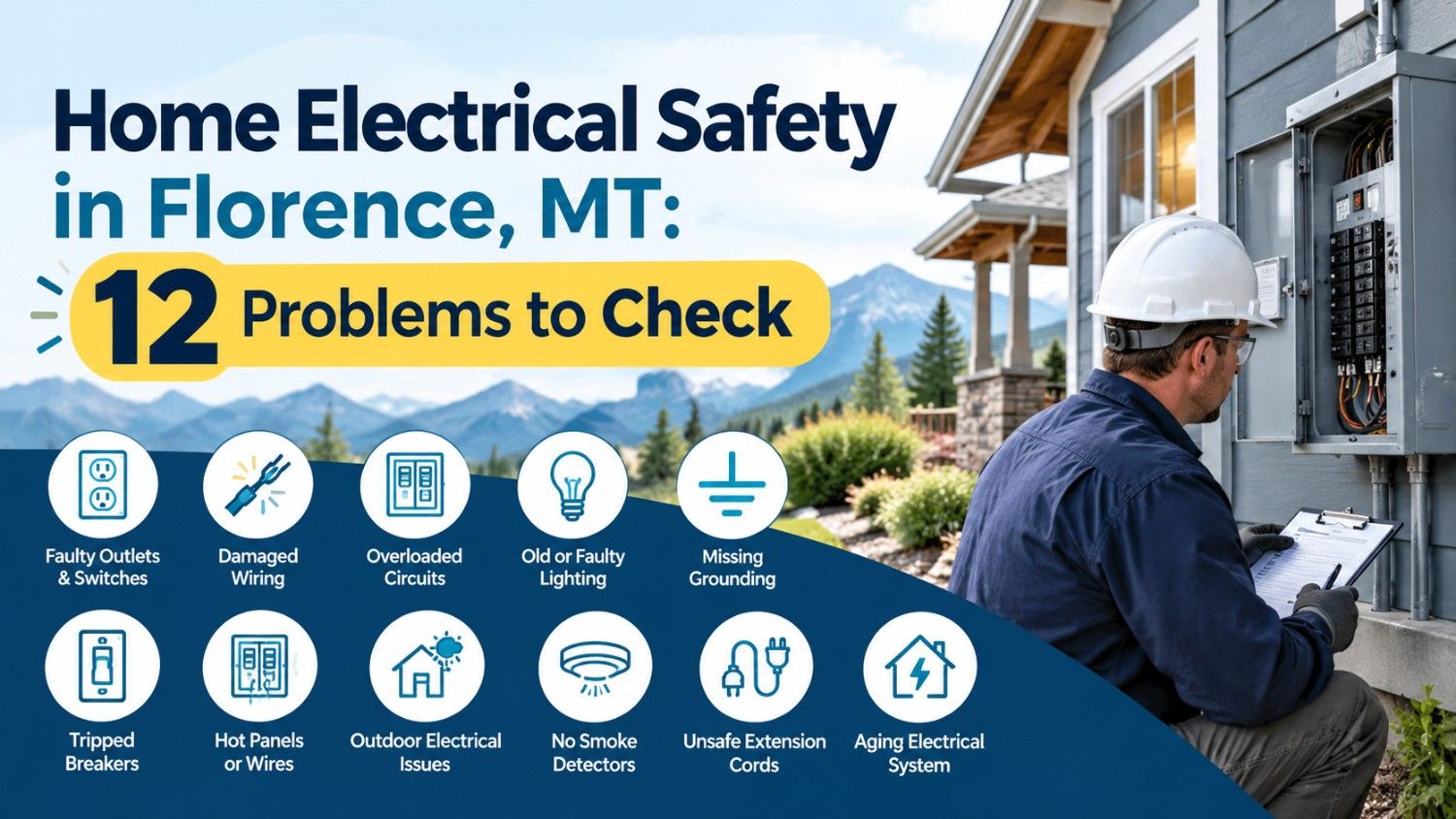
Electrical fires and shocks rarely happen without warning. In almost every case, there were signs beforehand, a flickering light, a breaker that trips a little too often, an outlet that feels warm to the touch. The trouble is, most homeowners in Florence, MT don’t know which of these signs are minor and which ones mean it’s time to call an electrician.
This guide covers the 12 most common home electrical safety problems we find in Florence and Bitterroot Valley homes, what causes each one, and when it’s worth electrical service and troubleshooting rather than waiting.
Why Home Electrical Safety Checks Matter in Florence, MT
Florence’s housing stock ranges from decades-old farmhouses to newer subdivision builds, and electrical systems age differently depending on how a home was wired, how many owners have added circuits over the years, and how well it’s been maintained. Wiring that was safe and up to code 30 or 40 years ago may no longer meet the demands of modern homes running multiple TVs, computers, space heaters, and kitchen appliances at once.
A yearly walkthrough, or home electrical inspection checklist before buying or selling a home, catches small issues before they turn into a fire hazard or a costly repair.
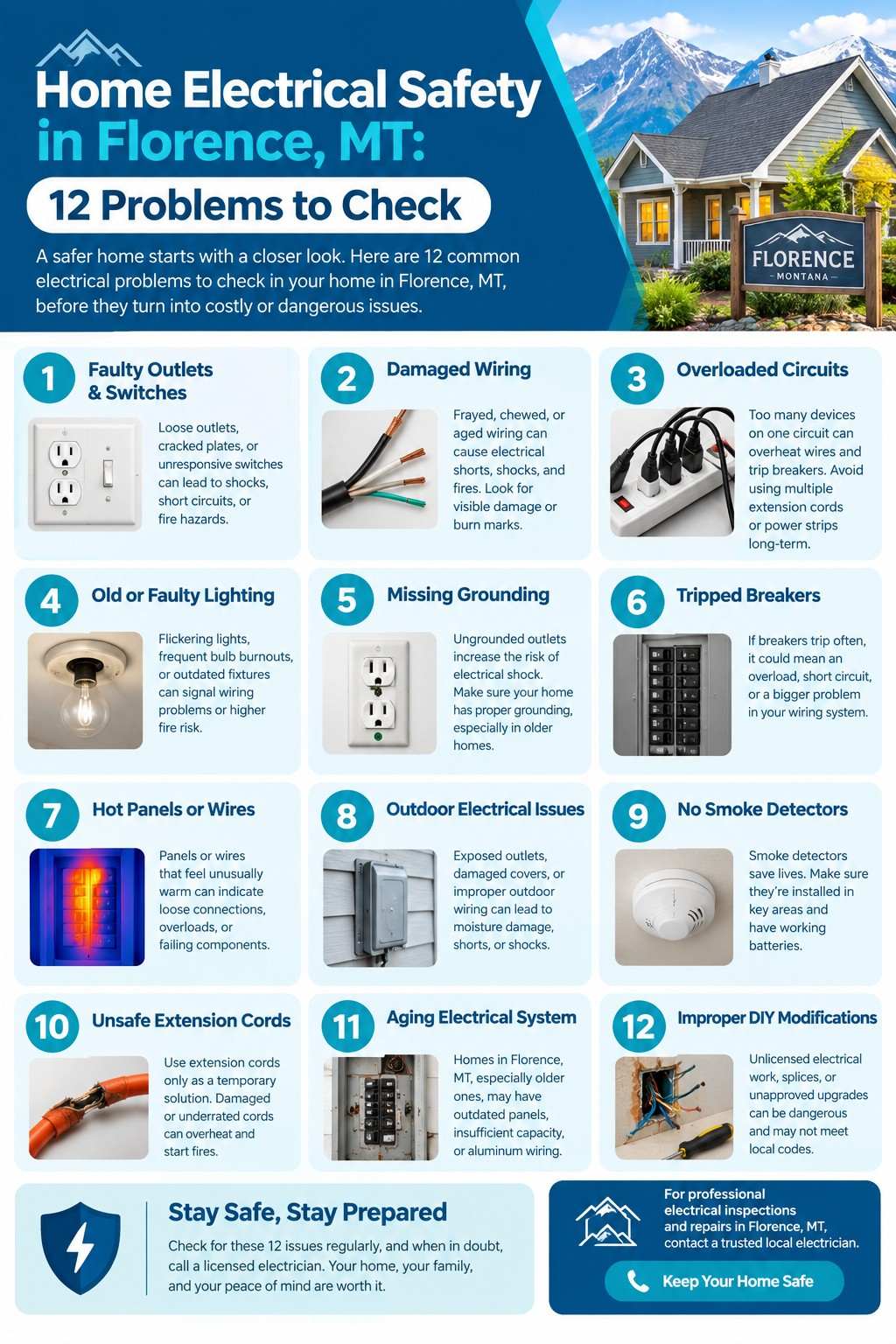
12 Home Electrical Safety Problems to Check
Walk through each of these 12 checkpoints in your own home. If more than one applies to you, it’s worth having a licensed electrician take a closer look.
1. Flickering or Dimming Lights
Lights that flicker or dim when another appliance kicks on usually point to a loose connection, an overloaded circuit, or a utility-side issue. Occasional flickering during a storm isn’t unusual, but lights that flicker regularly, room to room, often mean the circuit is under more load than it was designed for, something our licensed electricians can diagnose quickly.
2. Frequently Tripping Circuit Breakers
A breaker is designed to trip and protect your home when a circuit draws too much current. If one breaker trips repeatedly, or several breakers trip during normal daily use, it’s a sign the circuit is overloaded or a wiring fault exists somewhere downstream. This is one of the most common reasons Florence homeowners request emergency electrician in Missoula.
3. Warm or Discolored Outlets and Switch Plates
An outlet or switch plate that feels warm, looks scorched, or has a faint burning smell around it is never something to ignore. This usually means a loose wire connection is arcing behind the wall, generating heat that can eventually ignite nearby insulation or framing. Treat this as a priority, it’s exactly the kind of issue covered in what counts as an electrical emergency.
4. Outlets That Spark When Plugged In
A small, brief spark when plugging something in can be normal. A visible, repeated, or larger spark is not, and usually signals a damaged outlet, a loose connection, or moisture intrusion. Outlets in kitchens, bathrooms, and outdoor areas are especially prone to this and should be checked as part of a pre-purchase electrical inspection.
5. Two-Prong (Ungrounded) Outlets
Older Florence homes sometimes still have two-prong outlets that lack a ground wire, which offers less protection against shock, especially for larger appliances and electronics. Grounding isn’t just an inconvenience, it’s a real safety gap that a full electrical inspection typically flags and can correct with a rewire or a properly grounded replacement outlet.
6. Missing GFCI Protection in Kitchens & Bathrooms
Ground-fault circuit interrupter (GFCI) outlets are required near water sources, kitchens, bathrooms, garages, and outdoor outlets, because they cut power instantly if they detect a ground fault, preventing serious shock. If your kitchen or bathroom outlets don’t have the small “test/reset” buttons, they’re likely not GFCI-protected. This is a quick, affordable fix through our panel and wiring services.
7. Missing AFCI Protection in Bedrooms & Living Areas
Arc-fault circuit interrupters (AFCIs) detect the electrical arcing that causes many house fires, and current code requires them in most living areas, not just kitchens and bathrooms. Homes built or renovated before AFCI requirements were expanded often don’t have this protection at the panel. Ask about AFCI upgrades during our inspection checklist.
8. Overloaded Power Strips and Extension Cord Overuse
Relying on power strips and extension cords as permanent wiring, rather than a temporary solution, is one of the most common electrical hazards we see in Florence homes, especially in older houses with too few outlets. If a room needs three power strips to function, that’s a sign it needs additional outlets installed, not more extension cords. professional electrical repair can add outlets exactly where you need them.
9. Outdated or Recalled Electrical Panels
Certain older panel brands, including some Federal Pacific and Zinsco panels, have a well-documented history of breakers that fail to trip during an overload, which defeats the panel’s entire safety purpose. If your home still has one of these older panels, or a panel that’s simply undersized for your household’s current electrical demand, an upgrade is one of the highest-value safety investments you can make. Our team can assess your panel as part of home electrical inspection checklist.
10. Aluminum Wiring
Homes wired between the mid-1960s and mid-1970s sometimes used aluminum wiring instead of copper, which expands and contracts more than copper and is more prone to loose, overheating connections at outlets and switches over time. Aluminum wiring isn’t automatically dangerous, but it does need specific anti-oxidant connectors and periodic checks that electrical service and troubleshooting is trained to handle.
11. Exposed or Damaged Wiring
Wiring that’s exposed in a basement, attic, crawlspace, or outbuilding, whether from rodent damage, age, or a previous DIY project, is a direct shock and fire risk. This is especially common in barns, shops, and outbuildings on Florence-area properties, where wiring is more exposed to the elements and animals than in a finished home. If you spot exposed wiring, treat it the same way you would treat our emergency electrician guide and get it covered or replaced promptly.
12. DIY Electrical Work Without Permits
Unpermitted DIY electrical work, a swapped breaker, an added outlet, a fixture wired without a licensed electrician, is one of the most common findings during a home sale inspection in Florence. Beyond the safety risk, unpermitted work can complicate insurance claims and resale. If you’re not sure what’s been done to your home’s wiring over the years, a pre-purchase electrical inspection is the fastest way to find out exactly what you’re working with.
What Causes Most Electrical Safety Problems in Florence Homes
A few root causes explain most of the 12 problems above. Age is the biggest factor, wiring, panels, and outlets installed decades ago simply weren’t built for how much electricity a modern household uses. Rodent and moisture damage is another common culprit in rural Florence and Bitterroot Valley properties, where wiring in attics, crawlspaces, and outbuildings is more exposed to the elements than in a tightly sealed suburban home. Past DIY work is the third major factor, well-intentioned repairs or additions made without a permit or a licensed electrician often don’t meet code, even if they look fine on the surface. our licensed electricians can usually pinpoint which of these is behind the issue in your home.
Seasonal temperature swings play a role too. Montana’s freeze-thaw cycles cause materials to expand and contract repeatedly, which can loosen wire connections at outlets, switches, and panels over several years, one reason a periodic check with our inspection checklist matters even if nothing seems obviously wrong.
Indoor and Outdoor Areas Worth a Closer Look
Electrical safety isn’t limited to what’s behind your walls. Outdated or poorly sealed outdoor fixtures, exposed junction boxes near a deck or patio, and dark walkways without adequate lighting all count as safety issues too, the same areas we cover in our guide to indoor and outdoor lighting installation for Florence properties.
Garages, barns, and workshops deserve the same scrutiny as the main house. These spaces often run on older sub-panels or extension-cord setups that were never intended to be permanent, and they’re a common source of the electrical problems a full electrical inspection uncovers during a full-property visit.
When to Call an Electrician Immediately
- Burning smell, visible smoke, or scorch marks near an outlet, switch, or panel
- A breaker that won’t reset, or trips again within seconds of resetting
- Sparking outlets, or an outlet that’s hot to the touch
- Exposed wiring anywhere in the home, garage, or outbuilding
- A persistent buzzing or humming sound from an outlet, switch, or panel
Any of the situations above qualify as urgent, see our full breakdown of emergency electrician in Missoula so you know exactly what to do while you wait for help.
Your Home Electrical Safety Checklist
Use this quick checklist to see how many of the 12 problems apply to your home:
- Lights flicker or dim when other appliances turn on
- One or more breakers trip more than occasionally
- Any outlet or switch plate feels warm or looks discolored
- An outlet has sparked when something was plugged in
- The home has two-prong, ungrounded outlets
- Kitchen, bathroom, garage, or outdoor outlets lack GFCI protection
- Bedrooms and living areas lack AFCI-protected circuits
- Power strips are used as permanent wiring in any room
- The panel is an older or recalled brand, or feels undersized for the home
- The home was wired with aluminum wiring between the mid-1960s and mid-1970s
- Any wiring is exposed in a basement, attic, crawlspace, or outbuilding
- Unpermitted electrical work has been done on the home in the past
If you checked even two or three boxes, it’s worth having a professional take a look. schedule a free safety inspection and we’ll walk your property, room by room, to see exactly where the risk is.
Serving Florence and the Bitterroot Valley
We provide home electrical safety inspections and repairs throughout Florence, MT and the surrounding Bitterroot Valley, including Missoula, Lolo, Stevensville, and Hamilton. Whether it’s a single outlet that needs attention or a full-panel evaluation, our licensed electricians can walk you through our panel and wiring services and what it would take to bring your home up to current safety standards.
Already planning a lighting upgrade? Pair it with a safety check, see our guide to our lighting installation guide for ideas on improving both safety and curb appeal at the same time.
Ready to get your home checked? contact our team today for a home electrical safety visit with one of our licensed electricians.
Frequently Asked Questions
How often should I have my home’s electrical system checked?
Most homes benefit from a full electrical safety check every 3 to 5 years, or sooner if the home is older, was recently purchased, or shows any of the 12 warning signs above. Buyers and sellers should also request home electrical inspection checklist before closing on a home.
Is a tripping breaker always an emergency?
Not always, but it should never be ignored. A single trip during a storm or after plugging in a large appliance is usually normal. Repeated trips, or a breaker that trips immediately after resetting, should be treated as urgent, see what counts as an electrical emergency for guidance.
Do I need to replace my entire panel if it’s an older brand?
Not necessarily, but certain older panel brands have known safety issues that make replacement the safer long-term choice. The only way to know for sure is to have professional electrical repair assess your specific panel.
Are two-prong outlets illegal?
Two-prong outlets in older homes are typically grandfathered in and aren’t automatically illegal, but they don’t offer the same protection as grounded three-prong outlets, especially for larger appliances and sensitive electronics. Most homeowners choose to upgrade them for safety, not because they’re required to.
Can I install GFCI or AFCI protection myself?
GFCI outlets can sometimes be swapped by a confident DIYer, but AFCI protection is installed at the breaker panel and involves working inside a live panel, work that should be left to a licensed electrician. book an appointment to have both installed correctly and safely.
What’s the difference between a safety inspection and a home inspection?
A general home inspection covers the whole property at a surface level, while an electrical safety inspection from a licensed electrician goes deeper into the panel, wiring, and individual circuits. Many Florence homeowners request both, using our a pre-purchase electrical inspection alongside their standard home inspection.
Does homeowners insurance cover electrical damage from an old panel or wiring?
Coverage varies by policy and insurer, and some companies will decline coverage or require an upgrade if they find an outdated or recalled panel during underwriting. It’s worth checking your policy language and having electrical service and troubleshooting document your system’s condition, especially if you’re renewing or shopping for coverage.
What should I do if I find exposed wiring in my barn or shop?
Treat it as urgent. Shut off power to that circuit at the panel if you can safely identify it, keep people and animals away from the area, and reach out about our emergency electrician guide right away rather than waiting for a routine appointment.
Leave a Reply