
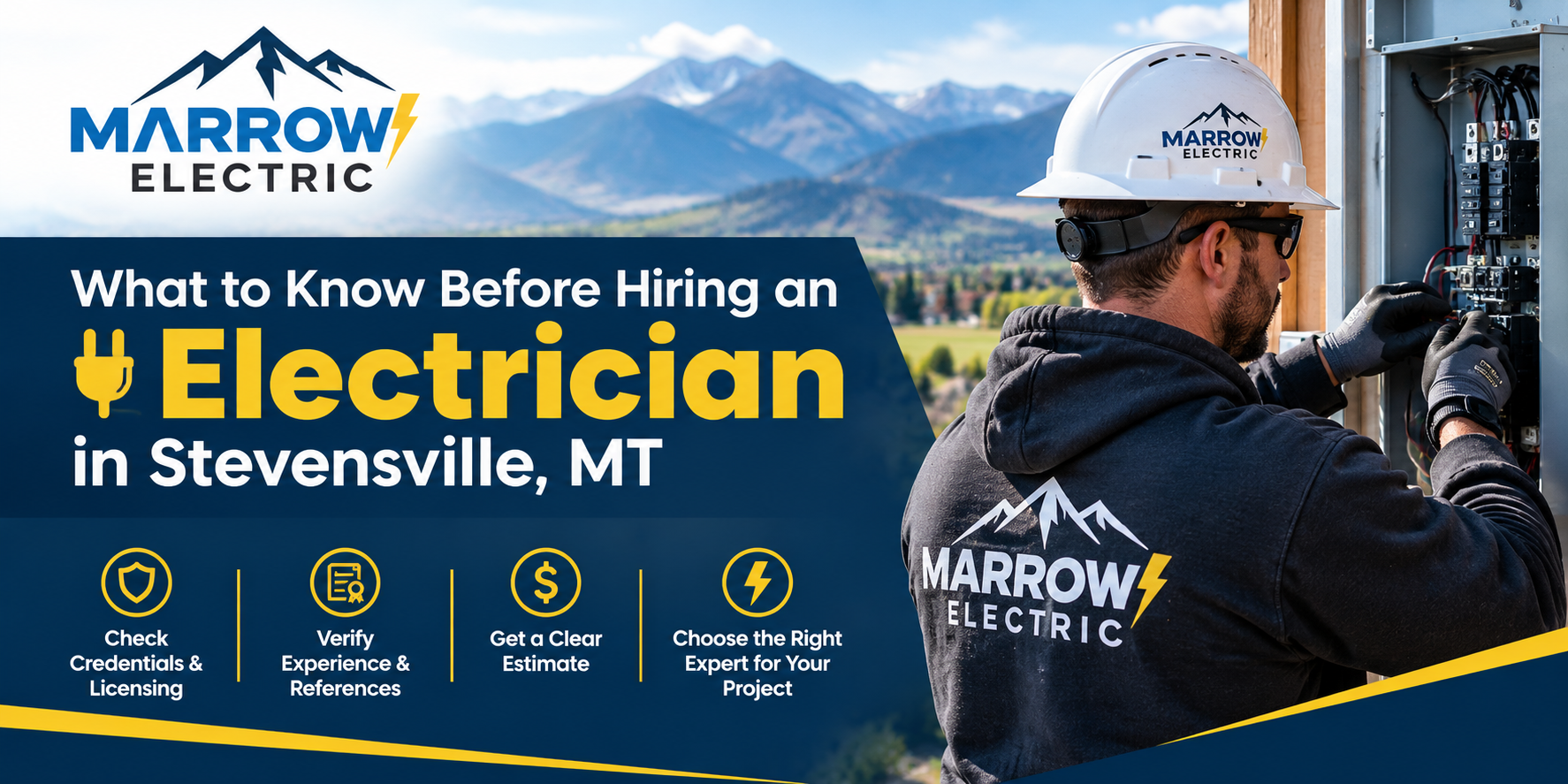
If you own a home or run a business in Stevensville, sooner or later you will need an electrician. Maybe your breaker keeps tripping every time the space heater runs. Maybe you are remodeling a kitchen, adding an EV charger to the garage, or building a new home on a lot with a view of the Bitterroot Mountains. Whatever the reason, hiring the right electrician is one of the most important decisions you will make for your property, because electrical work affects safety, insurance, resale value, and your daily comfort.
The problem is that not every electrician is the same. Licensing, insurance, experience, communication, pricing, and warranty terms can vary widely from one contractor to the next. A rushed decision can lead to code violations, failed inspections, surprise charges, or worse, a fire hazard hidden behind your walls.
This guide walks you through everything you should know before hiring an electrician in Stevensville, MT: what credentials to verify, what electrical work costs in the Bitterroot Valley, how to compare quotes, which questions to ask, and which red flags should make you pause. By the end, you will be able to hire with confidence.
Quick Answer: What Should You Check Before Hiring an Electrician in Stevensville?
Before you hire an electrician in Stevensville, Montana, confirm that they:
- Hold an active Montana electrical license (contractor and/or master electrician).
- Carry general liability insurance and workers’ compensation coverage.
- Know the electrical codes and permit process that apply in Stevensville and Ravalli County.
- Provide a written estimate that itemizes labor, materials, permits, and any repair work.
- Offer a workmanship warranty and have verifiable local reviews and references.
- Communicate clearly, return calls, and show up on time.
The rest of this article explains each point in detail so you can use it as a practical checklist.
Why Hiring the Right Electrician in Stevensville Matters
Stevensville is the oldest town in Montana, and the Bitterroot Valley is home to a mix of historic buildings, older farmhouses, mid-century homes, newer subdivisions, and custom builds. That variety matters for electrical work. A 1950s home may still have outdated wiring, undersized panels, or ungrounded outlets, while a new build may need a large service, smart home wiring, a standby generator, and EV charging from day one.
The right electrician understands the difference. They know how to work safely in older structures, how to plan electrical systems for new construction, and how to handle the demands of Montana winters, when heating loads, power outages, and frozen ground can all affect electrical projects.
Bad electrical work, on the other hand, is rarely obvious at first. Loose connections, overloaded circuits, improper grounding, and undersized wire can work fine for months or years before they cause a failure. That is why choosing carefully up front is far cheaper than fixing mistakes later. If you have already noticed warning signs in your home, our guide to electrical service and troubleshooting in Missoula and the Bitterroot Valley explains what to look for.
Electrician Hiring Checklist for Stevensville Homeowners
Use this checklist before hiring an electrician for repairs, remodeling, installations, or upgrades.
Step 1: Verify Montana Electrical Licensing
Licensing is the first thing to confirm, and it should never be skipped.
What Licenses Should an Electrician Hold in Montana?
In Montana, electrical work is regulated through the Montana Department of Labor & Industry and the state electrical board. Depending on the type of work, a professional may hold one or more of the following:
- Electrical contractor license: Allows a business to contract for electrical work. An unlimited electrical contractor license covers the widest range of projects.
- Master electrician license: Reflects the highest level of training and testing, including years of documented field experience.
- Journeyman electrician license: Allows an electrician to work under the supervision of a master electrician or contractor.
- Apprentice registration: Covers people learning the trade under supervision.
When you hire a company, you want to know that the business itself is properly licensed and that the people doing the work are either licensed or working under proper supervision. For example, T.J. Marrow of Marrow Electric holds both a master electrician license and an unlimited electrical contractor license in Montana, and began his career as an apprentice in 2004.
How to Check a License
You do not have to take anyone’s word for it. Ask for the license number and verify it through the state’s online license lookup. Confirm that the license is active, the name matches the person or company you are hiring, and there are no disciplinary actions listed. A legitimate electrician will be happy to provide this information, and many display license numbers on their website, estimates, and vehicles.
Why Licensing Matters for You
Hiring an unlicensed worker can create real problems:
- Work may not pass inspection, forcing you to pay twice.
- Your homeowner’s insurance may refuse to cover damage tied to unpermitted or unlicensed work.
- You could have difficulty selling your home if the work is not documented.
- You have limited recourse if something goes wrong.
Step 2: Confirm Insurance Coverage
Licensing proves training. Insurance protects your property and your finances.
General Liability Insurance
General liability insurance covers damage to your property that results from the contractor’s work, such as accidental damage to walls, ceilings, finishes, or other systems. Ask for a certificate of insurance and check that the policy is current.
Workers’ Compensation
If an electrician or their employee is injured on your property and the contractor does not carry workers’ compensation, you could be pulled into a costly dispute. Reputable contractors carry it as a matter of course. It is a simple question to ask, and the answer tells you a lot about how professionally a company operates.
Ask for Proof, Not Promises
A certificate of insurance can usually be emailed within a day. If a contractor hesitates or gets defensive when you ask, treat it as a warning sign.
Step 3: Make Sure They Know Local Codes and Permits
Electrical work is governed by the National Electrical Code as adopted in Montana, plus local requirements that can vary by jurisdiction. In and around Stevensville, projects may fall under state-level requirements or Ravalli County rules, depending on the location and scope of work.
Why Local Experience Matters
An electrician who works regularly in the Bitterroot Valley knows how inspections are handled, what inspectors look for, and how to schedule work so your project does not stall. They also understand regional conditions, including rural properties with long service runs, wells and pumps, outbuildings, shops, and properties that may rely on generators during storms and winter outages.
What Usually Requires a Permit?
Permit requirements depend on the project, but in general the following types of work often require a permit and inspection:
- New construction wiring
- Remodels and additions that alter circuits
- Electrical service and panel upgrades
- Standby generator and transfer switch installation
- EV charger circuits
- Hot tubs, saunas, and outbuilding feeders
A qualified electrician will explain which permits apply, pull them on your behalf, and include the cost in the estimate. If someone suggests skipping the permit to “save you money,” walk away. Unpermitted work can cause trouble with insurance claims and home sales for years afterward.
Step 4: Understand Typical Electrician Costs in the Stevensville Area
Pricing is one of the biggest questions homeowners have, and it is also one of the most misunderstood. Electrical costs depend on the complexity of the job, the materials, access to the work area, permit requirements, and the time involved. Prices also change over time, so treat any numbers you see online as rough guidance rather than a quote.
To give you a general sense of the market, some regional providers in western Montana publish pricing in the following ranges:
These figures come from publicly listed pricing from regional electricians and are not Marrow Electric’s rates. Your actual cost will depend on your home, your panel, your wiring, and the scope of work, which is why a written estimate matters.
Service Call Fees
A service call or diagnostic fee covers the electrician’s travel, time, and expertise to evaluate the problem. Many companies credit this fee toward the repair if you approve the work. Ask upfront whether the fee is credited, so you are not surprised on the invoice.
Hourly Rates vs. Flat-Rate Pricing
Some electricians charge by the hour, while others use flat-rate pricing for common jobs. Each approach has pros and cons:
- Hourly pricing can be fair for open-ended troubleshooting where the problem is unknown, but the final cost can be harder to predict.
- Flat-rate pricing gives you a firm number before work begins, which is helpful for defined projects like replacing a panel, installing a generator, or adding a dedicated circuit.
Neither is automatically better. What matters is that the method is explained clearly and in writing.
What Drives the Price Up or Down?
- Age and condition of wiring: Older homes may need additional work to bring things up to code.
- Accessibility: Finished walls, tight crawl spaces, and attics take more time.
- Distance: Rural properties and long wire runs increase material and labor needs.
- Materials: Panel brands, breaker types, wire gauge, and fixture quality all affect cost.
- Permits and inspections: Required fees and scheduling time are part of the project.
- Timing: Emergency or after-hours calls typically cost more than scheduled work.
If you are considering a larger project, such as a service upgrade, it helps to understand what a panel upgrade involves and when it is necessary before you request quotes.
Beware of the Lowest Bid
The cheapest quote is not always the best value. A suspiciously low price can signal missing permit costs, lower-grade materials, uninsured labor, or a contractor who plans to make up the difference with change orders later. Compare quotes line by line, not just by the bottom number.
Step 5: Get Multiple Written Estimates
It is smart to request at least three written estimates for any significant project. The goal is not simply to find the lowest price, but to understand the scope, compare approaches, and see which contractor communicates best.
What a Good Estimate Should Include
- A clear description of the work to be performed
- Itemized labor and materials
- Permit and inspection costs
- Whether drywall repair, painting, or patching is included
- Estimated start date and timeline
- Payment terms and deposit requirements
- Warranty details
- The contractor’s license number and contact information
How to Compare Quotes Fairly
Make sure each contractor is bidding on the same scope. If one quote includes a new panel with a surge protector and another does not, the prices are not comparable. Do not hesitate to ask each electrician to explain differences. A good contractor welcomes questions, because informed customers are easier to work with.
Why Written Estimates Protect You
A verbal quote is difficult to enforce. A written estimate creates a shared understanding, reduces misunderstandings, and gives you a reference point if the scope of work changes. You can request one directly through the Marrow Electric estimate request form.
Step 6: Ask About Warranties and Workmanship Guarantees
Even the best electricians occasionally encounter unexpected issues. A warranty shows that a contractor stands behind their work.
Questions to Ask About Warranties
- Is there a written workmanship warranty, and how long does it last?
- What does it cover, and what is excluded?
- Who do I call if something goes wrong after the project is complete?
- Are manufacturer warranties on panels, breakers, generators, or EV chargers passed along to me?
A contractor who is vague about warranty terms may not be planning to be around when problems appear.
Step 7: Check Reviews, References, and Local Reputation
In a small community like Stevensville, reputation matters. Word travels fast in the Bitterroot Valley, and strong local contractors are known by their work.
Where to Look
- Google Business Profile reviews: Look at the overall rating, the number of reviews, and how the company responds to feedback.
- Directory sites: Platforms such as Angi list local electricians and customer comments.
- Neighbors and friends: Personal recommendations are often the most reliable.
- Local real estate professionals: Agents, builders, and general contractors often know which electricians are dependable.
- The contractor’s own website: Look for real project details, photos, and customer testimonials.
What to Look for in Reviews
Rather than focusing only on star ratings, read the details. Look for comments about punctuality, communication, cleanliness, fair pricing, and how the contractor handled surprises. Reviews of Marrow Electric frequently mention clear communication, timely service, tidy work sites, and fair pricing, which are the same qualities you should look for in any electrician.
Ask for References
For larger projects, ask for references from similar jobs. A confident contractor will happily connect you with satisfied customers.
Step 8: Evaluate Communication and Professionalism
Technical skill matters, but so does how a contractor treats you. Many homeowners say their biggest frustration is not the electrical work itself, but contractors who do not return calls, miss appointments, or leave them wondering what is happening with the project.
Pay attention from the very first contact:
- Did they answer or return your call promptly?
- Did they listen to your description of the problem?
- Did they show up when they said they would?
- Did they explain things in plain language rather than jargon?
- Did they discuss scope, timeline, and cost before starting?
Those early interactions are a preview of how the whole project will go.
Step 9: Match the Electrician to the Type of Project
Not every electrician specializes in every kind of work. Before hiring, make sure the contractor has relevant experience for your specific project.
Electrical Repairs and Troubleshooting
Flickering lights, tripping breakers, dead outlets, buzzing sounds, and sudden power loss all call for careful diagnosis. You want someone who finds the root cause rather than simply replacing parts. See our overview of electrical service and troubleshooting for examples of common problems.
Panel Upgrades and Service Changes
Older homes, growing electrical loads, EV chargers, heat pumps, hot tubs, and workshops can push an old panel past its limits. Panel upgrades require permits, coordination with the utility, and planned outages, so choose an electrician with plenty of experience.
Remodels and Additions
Kitchen and bathroom remodels often involve new circuits, lighting layouts, and code updates. A good electrician will coordinate with your general contractor and help plan lighting and power needs before walls are closed up.
New Construction
Building a custom home or cabin involves planning electrical, lighting, smart home wiring, and future needs from the beginning. Learn more about our residential new construction electrical services in the Missoula and Bitterroot Valley area.
Generators and EV Chargers
Standby generators and EV chargers are increasingly popular across Montana, particularly where winter storms can cause extended outages. These installations involve load calculations, transfer switches, dedicated circuits, and permits, so experience is essential.
Commercial and Tenant Improvement Work
Businesses have different needs, including code requirements, scheduling around operating hours, and larger systems. If you operate a business, look for a contractor with commercial experience, such as commercial tenant improvement electrical work.
Step 10: Know the Red Flags
Most electricians are honest and capable, but a few warning signs should make you cautious.
- No license number or reluctance to provide it.
- Cash-only pricing or large upfront deposits with no written agreement.
- Suggesting you skip permits or inspections.
- High-pressure sales tactics, such as claiming a deal expires today.
- Unusually low bids that are far below the others.
- No proof of insurance.
- Vague estimates without itemized details.
- Door-to-door solicitation after a storm or outage.
- Poor communication before you have even hired them.
- Unwillingness to provide references.
If several of these appear together, move on and keep looking.
Questions to Ask Before You Hire
Use this checklist when you call or meet with a prospective electrician.
- Are you licensed in Montana, and can I have your license number?
- Do you carry general liability and workers’ compensation insurance?
- Will you pull the necessary permits and schedule inspections?
- Can I have a written, itemized estimate?
- Does the estimate include drywall patching or finish work?
- How long will the project take, and when can you start?
- Who will actually be doing the work?
- What warranty do you offer on your workmanship?
- How do you handle unexpected issues or change orders?
- Can you provide references from similar projects?
- What are your payment terms?
- How will you keep me informed during the project?
A professional will answer these without hesitation.
Special Considerations for Stevensville and Bitterroot Valley Properties
Older and Historic Homes
Stevensville has many older homes with original wiring that may not meet modern needs. Knob-and-tube wiring, aluminum branch circuits, ungrounded outlets, and fuse panels can all appear in older buildings. An experienced electrician can evaluate these safely and recommend practical upgrades without unnecessary work.
Rural and Acreage Properties
Many properties in the Bitterroot Valley include wells, barns, shops, guest houses, and detached garages. These often require long feeder runs, subpanels, proper grounding, and weather-appropriate equipment. Make sure your electrician has experience with rural installations.
Winter Weather and Power Outages
Montana winters bring snow, ice, and wind, which can lead to outages. Many homeowners now add standby generators or transfer switches so heat, wells, and refrigeration stay on. If that is on your list, ask about generator sizing, fuel type, and permit requirements before you buy equipment.
Growing Electrical Loads
Heat pumps, EV chargers, hot tubs, saunas, and home offices all increase demand on your system. If you are planning several upgrades, a qualified electrician can help you plan the panel and service so you only pay for the work once.
Why Homeowners Choose Marrow Electric in Stevensville
Marrow Electric is a family-owned electrical contractor serving Missoula and communities throughout the Bitterroot Valley, including Hamilton and Missoula, as well as Stevensville, Florence, Victor, Corvallis, and beyond.
Here is what sets the company apart:
- More than 20 years in the electrical trade, including custom homes, remodels, apartments, commercial properties, medical offices, and industrial facilities.
- Licensed in Montana, with a master electrician license and an unlimited electrical contractor license.
- Clear communication. Calls are returned, expectations are discussed before work begins, and customers are kept informed.
- Reliable service. The team shows up when promised and treats your property with respect.
- Code-compliant workmanship with attention to detail and clean job sites.
- A full range of services, including troubleshooting, panel upgrades, new construction, remodels, standby generators, EV chargers, smart home automation, and commercial work.
Because Marrow Electric is family-owned, you are working directly with people who care about their reputation in the community. To discuss your project, you can request a free estimate or call (406) 360-8071.
How the Hiring Process Typically Works
Knowing what to expect makes the process less stressful.
- Initial contact: You describe the problem or project by phone or through an online form.
- Site visit or evaluation: The electrician inspects the area, asks questions, and may take measurements or test circuits.
- Written estimate: You receive a detailed proposal with scope, price, and timeline.
- Scheduling: Once you approve, the work is scheduled, and permits are pulled if needed.
- Installation or repair: The electrician completes the work, keeping the area clean and safe.
- Inspection: If required, the work is inspected by the appropriate authority.
- Final walkthrough: The electrician explains the work, demonstrates any new equipment, and answers your questions.
- Follow-up: You receive documentation, warranty details, and an invoice.
Tips to Save Money Without Cutting Corners
Hiring a good electrician does not have to be expensive if you plan well.
- Bundle projects. Combining several jobs into one visit can reduce trip charges and labor time.
- Plan ahead. Scheduled work usually costs less than emergency service.
- Be specific. Clear descriptions and photos help electricians quote accurately.
- Prepare the work area. Clear access to panels and work zones saves time.
- Coordinate with other trades. During a remodel, scheduling electrical work before walls are closed prevents costly rework.
- Do not delay repairs. Small problems often become larger and more expensive when ignored.
Never try to save money by hiring unlicensed help or skipping permits. The potential cost of a mistake far exceeds any savings.
When to Call an Electrician Right Away
Some situations should not wait for a convenient appointment. Contact a licensed electrician promptly if you notice:
- Burning smells or scorched outlets
- Sparks or visible arcing
- Warm or discolored outlets and switch plates
- Breakers that trip repeatedly
- Buzzing or crackling sounds from the panel
- Flickering or dimming lights across the house
- Loss of power to part of your home
- Water exposure to electrical equipment
If you see smoke or flames, call 911 first. For other urgent issues, turn off power at the main breaker if it is safe to do so and call a qualified electrician.
Final Thoughts: Hire With Confidence
Hiring an electrician in Stevensville, MT does not need to be stressful. When you verify licensing and insurance, confirm local code and permit knowledge, compare written estimates, ask about warranties, check reputation, and watch how a contractor communicates, you dramatically improve your odds of a safe, successful project.
Electrical work is not the place to cut corners. The right electrician protects your home, your family, and your investment for decades. Take your time, ask questions, and choose someone who treats your property like their own.
Ready to talk through your project? Request a free estimate from Marrow Electric, contact our team, or call (406) 360-8071 to speak with a licensed Montana electrician serving Stevensville and the Bitterroot Valley. You can also browse more electrical tips and guides on our blog.

Frequently Asked Questions (FAQs)
How do I find a licensed electrician in Stevensville, MT?
Start by asking for the electrician’s Montana license number and verifying it through the state’s online license lookup. Check that the license is active, matches the business name, and has no disciplinary history. Then confirm insurance and read recent local reviews. Marrow Electric, for example, holds a master electrician license and an unlimited electrical contractor license in Montana.
How much does an electrician cost in Stevensville, MT?
Costs vary by project. Regional providers in western Montana commonly list service call fees around $95 to $135 and hourly labor around $130 to $160, often with a one-hour minimum. Larger jobs, such as panel upgrades or EV charger installation, are usually quoted as flat-rate projects. The best way to know your exact cost is to request a written estimate after the electrician evaluates your property.
Do electricians in Montana need to be insured?
Reputable electricians carry general liability insurance and workers’ compensation coverage. Even where requirements vary, you should always ask for a certificate of insurance before work begins. Insurance protects your property and shields you from liability if someone is injured on the job.
Do I need a permit for electrical work in Stevensville?
Many projects require a permit and inspection, including new construction, service and panel upgrades, generator installations, EV charger circuits, and certain remodels. Requirements depend on the scope of work and jurisdiction, so ask your electrician which permits apply. A licensed professional will typically handle permitting for you.
How many quotes should I get before hiring an electrician?
For larger projects, getting at least three written estimates is a good rule of thumb. Compare the scope, materials, permit costs, timeline, and warranty, not just the total price. For small repairs, one or two quotes may be enough.
What questions should I ask an electrician before hiring them?
Ask about licensing, insurance, permits, written estimates, timelines, who will perform the work, warranties, payment terms, how change orders are handled, and references from similar projects. A professional will answer these clearly and without hesitation.
What is the difference between a master electrician and a journeyman?
A journeyman electrician has completed an apprenticeship and passed a licensing exam, and works under the supervision of a master electrician or contractor. A master electrician has more documented experience, has passed a more advanced exam, and is qualified to design systems and supervise others. Many electrical contractors are led by a master electrician.
How can I tell if an electrician is unqualified or a scam?
Warning signs include refusing to share a license number, no proof of insurance, large cash deposits, pressure to decide immediately, suggestions to skip permits, vague estimates, and prices that are far lower than every other bid. Trust your instincts and keep looking if anything feels off.
Should I hire a local electrician or a larger company from out of town?
Local electricians understand regional codes, weather, inspectors, and property types, and they are easier to reach if you need follow-up service. They also have a stronger incentive to protect their reputation in the community. For Stevensville homeowners, a Bitterroot Valley electrician is usually the practical choice.
Does Marrow Electric serve Stevensville?
Yes. Marrow Electric provides residential, commercial, and industrial electrical services throughout Missoula and the Bitterroot Valley, including Stevensville, Florence, Victor, Corvallis, Hamilton, and surrounding communities. You can request a free estimate online or call (406) 360-8071.
When should I call an electrician immediately?
Call right away if you notice burning smells, sparks, hot outlets, buzzing from the panel, repeated breaker trips, or partial power loss. If you see smoke or fire, call 911 first.
Need an Electrician?
Reliable electrical service in Stevensville and the Bitterroot Valley.
Call Marrow Electric65 Goose Ln, Stevensville, MT 59870