
Quick Answer
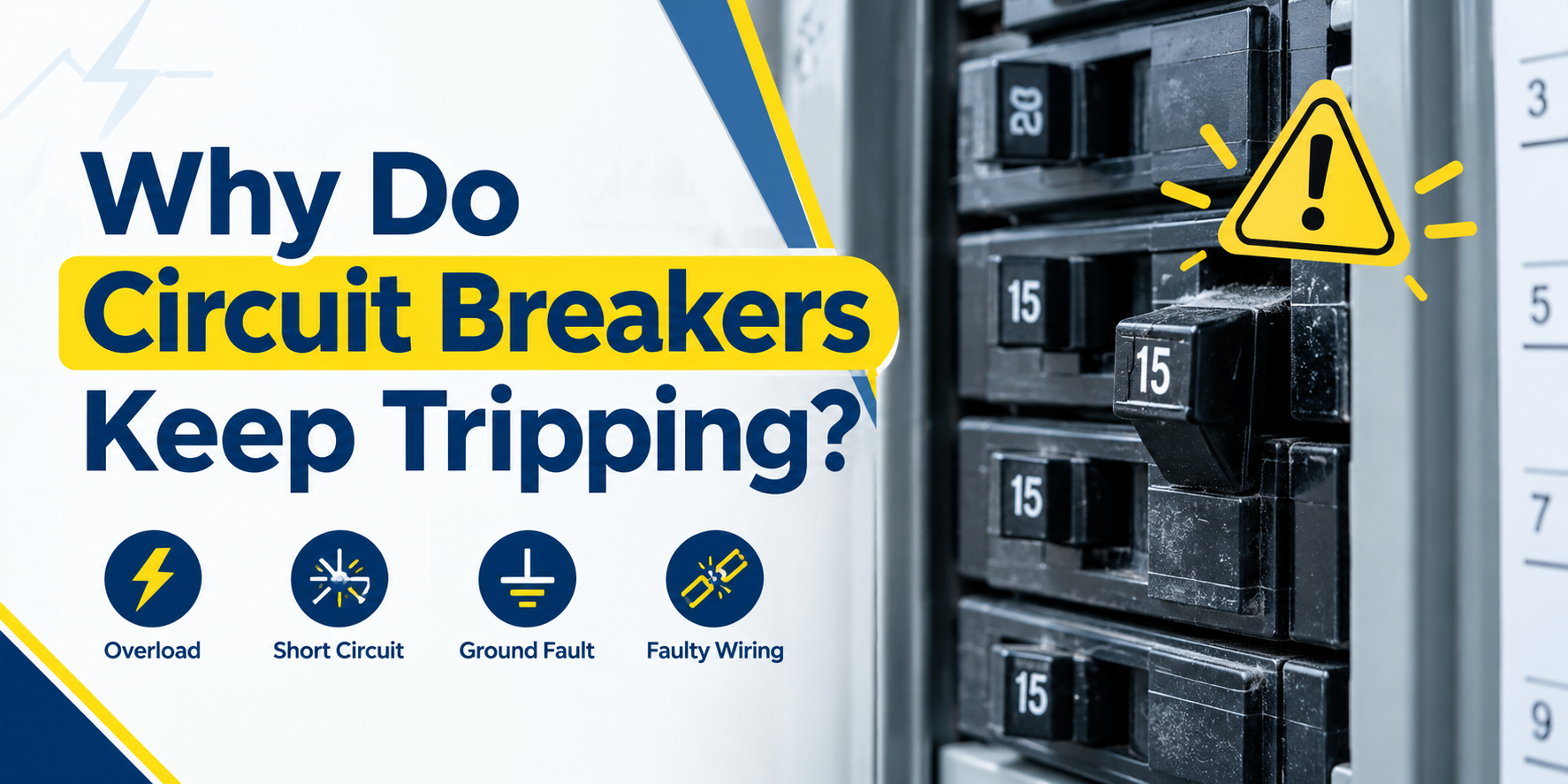
A circuit breaker keeps tripping because it’s doing its job: cutting power the instant it detects more current than the circuit can safely handle. The most common causes are an overloaded circuit (too many devices drawing power at once), a short circuit (a hot wire touching a neutral or another hot wire), a ground fault (a hot wire touching a grounded surface), an arc fault (damaged or loose wiring throwing sparks), or a worn-out breaker that has become too sensitive with age. Unplugging devices one at a time and resetting the breaker will identify an overload; if it trips again with nothing plugged in, or if you smell burning or see scorch marks, stop and call a licensed electrician immediately.
If your circuit breaker keeps tripping, the panel is telling you something is drawing more electricity than the wiring in that circuit was designed to carry, and it’s shutting the power off before that excess current turns into overheated wires or an electrical fire. For most Missoula and Bitterroot Valley homeowners, a tripping breaker is either a simple overload you can fix in five minutes, or a warning sign in an aging electrical system that’s worth having a professional look at. Below, we’ll walk through exactly why breakers trip, how to tell the difference between a nuisance trip and a genuine hazard, and when it’s time to call in a licensed Missoula electrician.
How a Circuit Breaker Actually Works
Every circuit in your home is protected by a breaker in your electrical panel. Think of the breaker as a safety valve for electricity: as current flows through it, the breaker constantly monitors the amount of current passing through the circuit. Each breaker is rated for a specific amount of current, typically 15 or 20 amps for household outlets and lighting circuits, and higher (30, 40, or 50 amps) for major appliances like electric ranges, dryers, and EV chargers. When the current flowing through the circuit exceeds that rating, a small metal strip inside the breaker heats up and bends, or an electromagnet inside the breaker pulls a trip mechanism, and the switch flips to the “off” (or middle) position, cutting power before the wiring can overheat.
This is a feature, not a flaw. A breaker that trips is doing exactly what it was designed to do: protecting the wires inside your walls, and your home, from damage. The real question isn’t “why did the breaker trip”, it’s “what is causing the current draw that made it trip,” and whether that cause is routine or something that needs professional attention.
The 6 Most Common Reasons a Breaker Keeps Tripping
1. An Overloaded Circuit
This is by far the most common cause, especially in older Missoula homes that weren’t wired with today’s appliance load in mind. An overload happens when too many devices on the same circuit try to draw power at the same time, a space heater, a hair dryer, a microwave, and a couple of lamps all plugged into the same kitchen or bedroom circuit, for example. Each device draws a certain number of amps, and once the combined draw exceeds the breaker’s rating (commonly 15 or 20 amps), the breaker trips.
Overloads are especially common during Montana winters, when space heaters get plugged in throughout the house to supplement heating in drafty rooms, often on circuits that were never designed to carry that kind of continuous load. If your breaker trips every time you run a specific combination of appliances, an overload is almost always the culprit.
2. A Short Circuit
A short circuit happens when a “hot” wire (carrying current) touches a neutral wire or another hot wire directly, instead of flowing through a device first. This creates a sudden, massive surge of current, far beyond what the circuit is rated for, and the breaker trips almost instantly, often with a noticeable snap. Short circuits are usually caused by damaged wire insulation, a loose wire connection inside an outlet or switch box, or a faulty appliance cord. This is one of the reasons whole-house rewiring projects in older homes exist in the first place, decades-old insulation becomes brittle and cracks over time, which is a common finding during our whole-house rewiring assessments in Missoula.
Short circuits often trip the breaker repeatedly and immediately, sometimes within seconds of resetting it, and can be accompanied by a burning smell or a scorch mark near an outlet or switch. This is not a DIY troubleshooting situation; a short circuit indicates damaged wiring that needs to be located and repaired by a licensed electrician.
3. A Ground Fault
A ground fault is similar to a short circuit, but instead of a hot wire touching a neutral wire, it touches a grounded surface, the metal frame of an appliance, a grounded outlet box, or even a damp wall. Ground faults are especially common in kitchens, bathrooms, garages, and outdoor circuits where moisture is present, which is exactly why those areas are required to have GFCI (ground-fault circuit interrupter) protection under the electrical code.
If it’s specifically a GFCI outlet or GFCI breaker that keeps tripping, not a standard breaker, the cause and the fix are a little different. We cover that in detail, including which rooms legally require GFCI protection in Montana, in our guide to GFCI vs. AFCI protection.
4. An Arc Fault
Arcing happens when electricity jumps across a gap in damaged, frayed, or loosely connected wiring, creating heat and sparks that can ignite nearby insulation or building materials. Arc faults are a leading cause of electrical fires in older homes, which is why modern electrical code requires AFCI (arc-fault circuit interrupter) breakers on most living-area circuits in new construction and major remodels. If a breaker trips intermittently, especially when a cord is wiggled, a switch is flipped, or a specific outlet is used, an arc fault from damaged wiring or a failing connection is a strong possibility.
5. A Faulty or Worn-Out Appliance
Sometimes the problem isn’t the house wiring at all, it’s the appliance. A refrigerator with a failing compressor, a space heater with damaged internal wiring, or a hair dryer with a worn cord can draw an abnormal amount of current or create a short inside the device itself, tripping the breaker even though the circuit itself is perfectly healthy. A simple way to test this: unplug everything from the circuit, reset the breaker, then plug items back in one at a time. If the breaker trips again as soon as you plug in one particular appliance, that appliance, not your wiring, is the likely cause.
6. An Aging or Failing Breaker
Circuit breakers don’t last forever. After 20–30 years of use, the internal mechanism that senses current and trips the switch can wear out, becoming either too sensitive (tripping on normal loads) or too weak (failing to trip when it should, a much more dangerous problem). If your home’s electrical panel is original to a house built before the 1990s, and a breaker trips with no clear overload, short, or ground fault present, the breaker itself may simply need to be replaced. This is also a good moment to have the whole panel evaluated, many Missoula homes with original panels are also carrying too much load for modern life, which is exactly what we address in residential electrical panel upgrades.
Standard Breakers vs. GFCI vs. AFCI: Why It Changes the Diagnosis
Not all breakers protect against the same thing, and knowing which type is tripping narrows down the cause considerably.
Standard breakers only protect against overloads and short circuits, too much current, or a direct hot-to-neutral connection. GFCI (ground-fault) breakers and outlets add protection against current leaking to ground, which is why they’re required near water sources and are far more sensitive to moisture and appliance faults. AFCI (arc-fault) breakers monitor for the electrical signature of arcing, sparking caused by damaged or loose wiring, and are required on most bedroom and living-area circuits in newer construction and many remodels under current code.
If a GFCI outlet or breaker is what’s tripping, moisture, a failing outlet, or a faulty appliance are the most likely causes. If it’s an AFCI breaker, damaged wiring, a pinched cord, or a loose connection somewhere on that circuit is more likely. We break this distinction down in full, including which Montana homes are required to have each type, in GFCI vs. AFCI: What’s the Difference.
Nuisance Trip vs. Real Electrical Problem: How to Tell the Difference
Not every tripped breaker means something is seriously wrong, but not every tripped breaker is harmless, either. Here’s how to tell which situation you’re in.
Signs It’s Likely a Simple Overload (Low Concern)
The breaker trips only when running several high-draw devices at once (space heater plus microwave, for example). It resets normally and holds once you reduce the load. It happens on the same circuit every time, and you can identify a clear pattern tied to specific appliances.
Signs You Need a Licensed Electrician (Don’t Wait)
The breaker trips immediately upon resetting, even with nothing plugged in. You notice a burning smell, warm outlet covers, or discoloration/scorch marks around an outlet or the panel. The breaker trips at random, with no clear pattern. You hear buzzing, crackling, or popping sounds from an outlet, switch, or the panel itself. Multiple breakers are trip-prone, or the panel is a brand known for reliability issues (Federal Pacific Electric and Zinsco panels, both common in older homes, are widely recognized as fire hazards by electricians and insurers alike). Any of these signs point to a wiring problem, a failing breaker, or a panel issue rather than a simple overload, and they’re covered in more depth in our post on signs you need electrical repair.
How to Safely Reset a Tripped Breaker
Before resetting a breaker, unplug or turn off whatever was running on that circuit when it tripped. This prevents the breaker from tripping again the instant power is restored and lets you test whether the issue was a simple overload.
1. Locate your electrical panel and find the breaker in the “off” or middle position, tripped breakers often sit between “on” and “off” rather than fully flipped. 2. Push the breaker firmly to the full “off” position first, then switch it back to “on.” This resets the internal trip mechanism. 3. If it holds, plug devices back in one at a time to identify what caused the overload. 4. If it trips again immediately with nothing connected to the circuit, stop resetting it and call an electrician, repeatedly resetting a breaker that won’t hold can mask a dangerous fault rather than fix it.
Preventive Steps to Reduce Nuisance Tripping
A little load management goes a long way toward keeping breakers from tripping in the first place, especially on older circuits that weren’t built for modern appliance demand.
Spread high-draw appliances across circuits. Avoid running space heaters, microwaves, and hair dryers on the same circuit as other high-wattage devices. 2. Know your panel’s labeling. A clearly labeled panel makes it easy to identify which outlets and rooms share a circuit, so you can plan appliance use accordingly. 3. Keep GFCI outlets clean and dry. Moisture buildup in bathroom, garage, and outdoor outlets accelerates GFCI wear and nuisance tripping. 4. Don’t daisy-chain extension cords and power strips. Chaining multiple power strips off one outlet is a common, avoidable cause of overload trips. 5. Schedule a panel inspection every few years, particularly for homes over 20–25 years old, to catch worn breakers and loose connections before they cause repeated trips or become a safety issue.
Why This Matters More in Older Missoula & Bitterroot Valley Homes
A lot of housing stock in Missoula, Hamilton, and the surrounding Bitterroot Valley predates modern electrical demand, homes built decades ago simply weren’t wired for today’s mix of HVAC systems, home offices, entertainment equipment, and EV charging. A panel and circuit layout that was adequate in 1985 is often undersized for how a household uses electricity now, which shows up first as breakers that trip more often than they should. In many cases, what looks like “my breaker keeps tripping” is really “my electrical system needs an update,” and it’s worth having it evaluated against current Montana electrical code requirements, particularly if you’re planning a remodel or preparing to sell.
This is especially relevant if you’re also noticing dimming lights when appliances kick on, warm spots on the wall near outlets, or you’ve been told during a home sale inspection that there’s unpermitted or outdated wiring. These are the same underlying issues we address for clients pursuing residential remodel and rewiring projects across Missoula and Ravalli County.
Specific Rooms and What Their Trips Usually Mean
Kitchen
Kitchens run some of the highest-draw appliances in the house, microwaves, toaster ovens, coffee makers, air fryers, often on the same one or two small-appliance circuits required by code. Frequent trips here are usually a straightforward overload, though GFCI outlets (required near sinks and countertops) can also trip from moisture or a failing appliance.
Bathroom
Bathroom circuits are almost always GFCI-protected because of the proximity to water. A hair dryer, combined with moisture in the air from a shower, is a very common trigger. If a bathroom GFCI trips constantly even with nothing running, the outlet itself may be failing and due for replacement.
Garage, Basement, or Outdoor Circuits
These circuits are exposed to temperature swings, moisture, and, in Montana winters, condensation, all of which stress GFCI protection and wiring insulation. Frequent trips in these areas, especially if a garage is used as a workshop with power tools, often trace back to overload combined with environmental wear on outlets and connections.
Frequently Asked Questions
Is it dangerous if my breaker keeps tripping?
A breaker tripping occasionally due to an overload isn’t dangerous, it’s the system working correctly. It becomes a safety concern when a breaker trips repeatedly with no clear cause, won’t stay reset, or is accompanied by burning smells, warm outlets, or scorch marks. In those cases, treat it as a warning sign and have an electrician inspect the circuit before continuing to use it.
Can I just replace the breaker myself?
Replacing a breaker involves working inside a live electrical panel, which carries a real risk of serious injury if you’re not trained and equipped for it. Beyond the safety risk, a breaker that keeps tripping is frequently a symptom of an underlying wiring issue rather than a faulty breaker itself, replacing the breaker without diagnosing the cause can mask a more serious problem. This is a job for a licensed electrician.
Why does my breaker trip only in winter?
Cold-weather months bring space heaters, holiday lighting, and higher overall electrical demand onto circuits that may already be near their limit, which is why overload-related trips spike in winter. It can also point to a circuit that’s marginal year-round but only gets pushed over the edge once seasonal appliances are added.
What’s the difference between a breaker tripping and a fuse blowing?
Older homes may still have fuse boxes instead of breaker panels. A blown fuse is a one-time-use device that must be physically replaced after it trips, while a circuit breaker can simply be reset. If your home still has a fuse box, it’s worth discussing an upgrade to a modern breaker panel, both for convenience and because most fuse panels no longer meet current safety expectations.
How much does it cost to fix a breaker that keeps tripping?
Cost depends entirely on the cause. Correcting a simple overload might mean nothing more than redistributing devices across circuits, while diagnosing and repairing a short circuit, ground fault, or damaged wiring involves labor and possibly materials to repair the affected run. For a general sense of local pricing on electrical service calls and repairs in the area, see our breakdown of electrician costs in Florence, MT, which applies broadly across the greater Missoula service area.
Should I upgrade my panel if breakers keep tripping?
Not automatically, plenty of tripping issues are isolated to one circuit and don’t require a panel upgrade. But if trips are happening across multiple circuits, your panel is more than 25–30 years old, or you’re adding major loads like an EV charger, a panel upgrade is often the more cost-effective long-term fix rather than repeatedly patching individual circuits.
Can a tripping breaker damage my appliances?
The breaker itself is protecting your appliances and wiring by cutting power before excess current causes damage, so a properly functioning breaker prevents harm rather than causing it. Repeated hard trips can occasionally stress an appliance’s internal components over time, but the bigger risk is a breaker that fails to trip when it should, which is why an aging or unreliable panel is worth having evaluated.
Why does my breaker trip when I turn on one specific light or appliance?
This pattern almost always points to a fault tied directly to that device or the wiring feeding it, a damaged cord, a failing motor or heating element inside the appliance, or a short in the fixture’s wiring, rather than a general circuit overload. Unplug or isolate that specific item and test the circuit again; if the breaker holds without it, the appliance or fixture itself is the source of the problem.
When to Call Marrow Electric
A breaker that trips once in a while when you overload a circuit is normal. A breaker that trips repeatedly, won’t hold a reset, or comes with any warning sign, burning smells, scorch marks, buzzing, or warm outlets, is your electrical system telling you it needs attention. Marrow Electric provides licensed troubleshooting and repair for homes throughout Missoula, Hamilton, and the Bitterroot Valley, from single-circuit diagnostics to full panel upgrades and whole-house rewiring. If your breaker keeps tripping and you’re not sure why, request a free estimate and we’ll track down the cause and fix it right the first time.