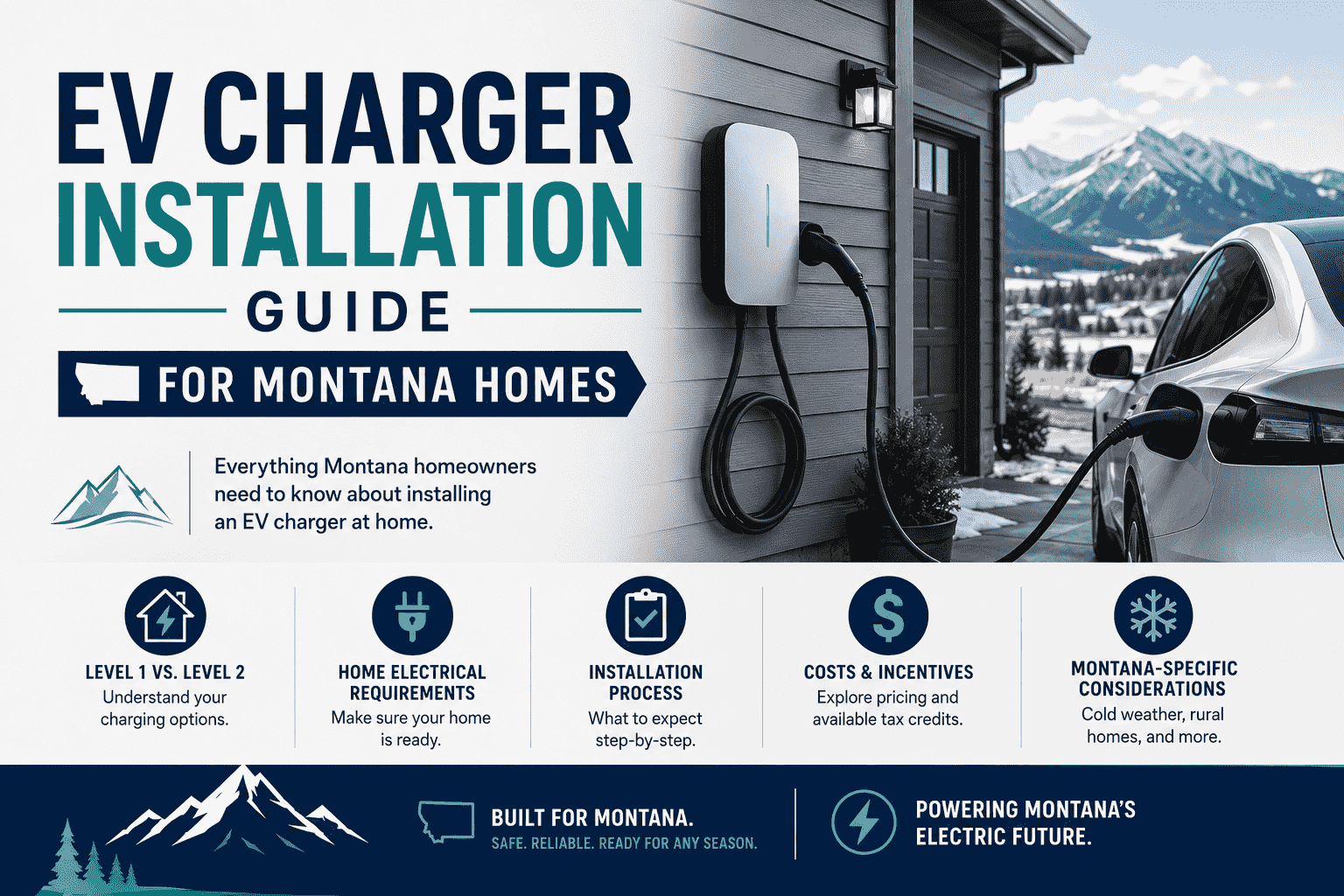
More Montana homeowners are making the switch to electric vehicles, and one of the first questions that comes up is simple: how do you actually charge it at home? Montana’s cold winters, older housing stock, and rural properties all add a few wrinkles that don’t come up in a generic EV charger guide. Here’s what homeowners in and around Missoula need to know before installing a home charger.
Level 1 vs. Level 2 Charging
Level 1 charging uses a standard 120-volt household outlet — the same kind you’d plug a lamp into. It’s the slowest option, typically adding only 3-5 miles of range per hour, which makes it impractical for most daily driving in a state where commutes and errands can mean longer distances.
Level 2 charging uses a 240-volt circuit, similar to what powers an electric dryer or oven. It can add 20-30 miles of range per hour, fully charging most EVs overnight. For nearly every Montana homeowner, Level 2 is the practical choice.
What a Level 2 Installation Involves
A proper Level 2 charger installation isn’t just plugging in a new outlet. It typically includes:
- Evaluating your home’s electrical panel capacity
- Running a dedicated 240-volt circuit to the charging location
- Installing a properly rated breaker
- Mounting either a hardwired charging unit or a NEMA 14-50 outlet
- Permitting and inspection through your local building department
Skipping any of these steps, especially the panel evaluation, is one of the most common mistakes homeowners make when trying to DIY or hire an unlicensed installer.
Does Your Panel Have Enough Capacity?
This is the single biggest factor in any home EV charger installation. Older Montana homes, especially those built before the 1990s, often have 100-amp electrical panels that were never designed to handle the additional 40-50 amp draw of a Level 2 charger on top of everything else running in the house.
A licensed electrician can perform a load calculation to determine whether your existing panel can safely support a charger, or whether you’ll need a panel upgrade first. This is not a step to guess on — an undersized panel that’s overloaded is a fire risk, not just an inconvenience.
Cold Weather Considerations
Montana winters affect EV charging in a few practical ways:
- Reduced range: Cold temperatures reduce battery efficiency, so many EV owners charge more frequently in winter than they would in milder climates.
- Garage vs. outdoor installation: Charging in a garage, even an unheated one, protects both the vehicle and the charging equipment from extreme cold and ice buildup.
- Cable and equipment ratings: Not all charging equipment is rated for extreme cold. A qualified installer will make sure the unit and wiring you choose can handle Montana’s winter temperatures without issue.
Permits and Local Code
Missoula and surrounding Montana jurisdictions require an electrical permit for EV charger installations that involve new circuits or panel work. A Missoula electrical contractor will pull the necessary permit and schedule the required inspection as part of the job, which also matters if you ever sell your home and need to show the work was done to code.
Frequently Asked Questions
How much does a home EV charger installation cost in Montana?
Cost depends largely on your panel’s existing capacity and how far the charger location is from the panel. A straightforward installation with adequate panel capacity costs less than one that requires a panel upgrade or a long wire run.
Do I need a permit to install a Level 2 charger at home?
Yes, in most Montana jurisdictions, including Missoula, any new dedicated circuit for an EV charger requires an electrical permit and inspection.
Can my existing electrical panel handle an EV charger? It depends on your panel’s amperage and how much of that capacity is already in use. A Missoula electrical contractor can run a load calculation to confirm whether an upgrade is needed.
How long does a home EV charger installation take?
A straightforward installation can often be completed in a few hours. Jobs that require a panel upgrade or a longer circuit run take longer and may need a follow-up visit for inspection.
Should I install the charger in my garage?
For Montana’s climate, a garage installation is generally recommended. It protects the vehicle and equipment from extreme cold, ice, and snow.
Can I install a Level 2 charger myself?
It’s not recommended. Improper installation of a high-amperage circuit is a fire and shock hazard, and unpermitted work can cause problems if you sell your home later.
Will installing an EV charger increase my electric bill?
Yes, charging an EV at home adds to your electricity usage, though many homeowners offset this by charging overnight during off-peak utility rates where available.
Why Choose Marrow Electric
Installing an EV charger correctly the first time comes down to accurate panel evaluation, proper permitting, and equipment suited for Montana’s climate. Marrow Electric handles EV charger installations for homeowners throughout Missoula and the surrounding area, with the local knowledge to account for older panels, cold-weather equipment ratings, and the permitting process specific to this area.
If you’re considering an EV charger for your home, give us a call — we can evaluate your panel and walk you through what installation will look like for your specific situation.