When the power goes out in the Bitterroot Valley, it rarely picks a convenient time. Wind off the Sapphire Mountains, heavy wet snow, or an aging rural line can knock out electricity to Florence homes for hours or days at a stretch. A properly installed backup generator keeps your well pump, furnace, refrigerator, and sump pump running until utility power returns. This guide walks Florence, MT homeowners through how generator installation actually works, how to size and fuel a unit, what Montana code requires, what it costs, and how to choose a licensed electrician for the job. If you’d rather skip ahead, you can always request a free on-site estimate from our team.
Why Florence, MT Homeowners Are Installing Backup Generators
Florence homeowners install backup generators mainly because rural power lines here go down more often, and for longer, than lines in denser parts of Missoula. Florence sits along a stretch of the Bitterroot Valley served largely by overhead rural distribution lines, which are more exposed to falling trees, heavy wet snow, and high wind than buried urban feeders. A single downed line can leave a property without power for several hours during a storm, and outages during a hard winter freeze put well pumps, furnace blowers, and sump pumps at risk at exactly the moment they matter most.
For many Florence properties on private wells, a power outage means no running water at all, since the pump has no backup unless the home has generator power. That single fact drives a lot of standby generator requests we get from the area. If you’ve already had an outage disable your well pump or trip your panel, it’s worth reading our guide on troubleshooting electrical service issues before you invest in backup power, since some outage symptoms point to a service or panel problem rather than a utility outage.
Types of Generators for Florence Homes
Portable Generators
A portable generator is the lower-cost entry point: you wheel it out, run extension cords or a manual transfer switch to select circuits, and fuel it with gasoline as needed. It’s a reasonable option for a cabin or a home that only needs to keep a few circuits alive during short outages, but it requires you to be home, awake, and willing to manually start and refuel it, which is a real limitation during a Montana ice storm at 2 a.m.
Standby (Whole-House) Generators
A standby generator is permanently installed outside the home, wired into an automatic transfer switch, and fueled by propane or natural gas. When utility power drops, it starts itself within seconds and can carry part or all of the home’s electrical load automatically, with no one needing to be present. This is the option most Florence homeowners land on for full-time or seasonal residences, especially those built during a remodel or new construction project where the electrical panel is already being upgraded.
How Generator Installation Works: Step-by-Step
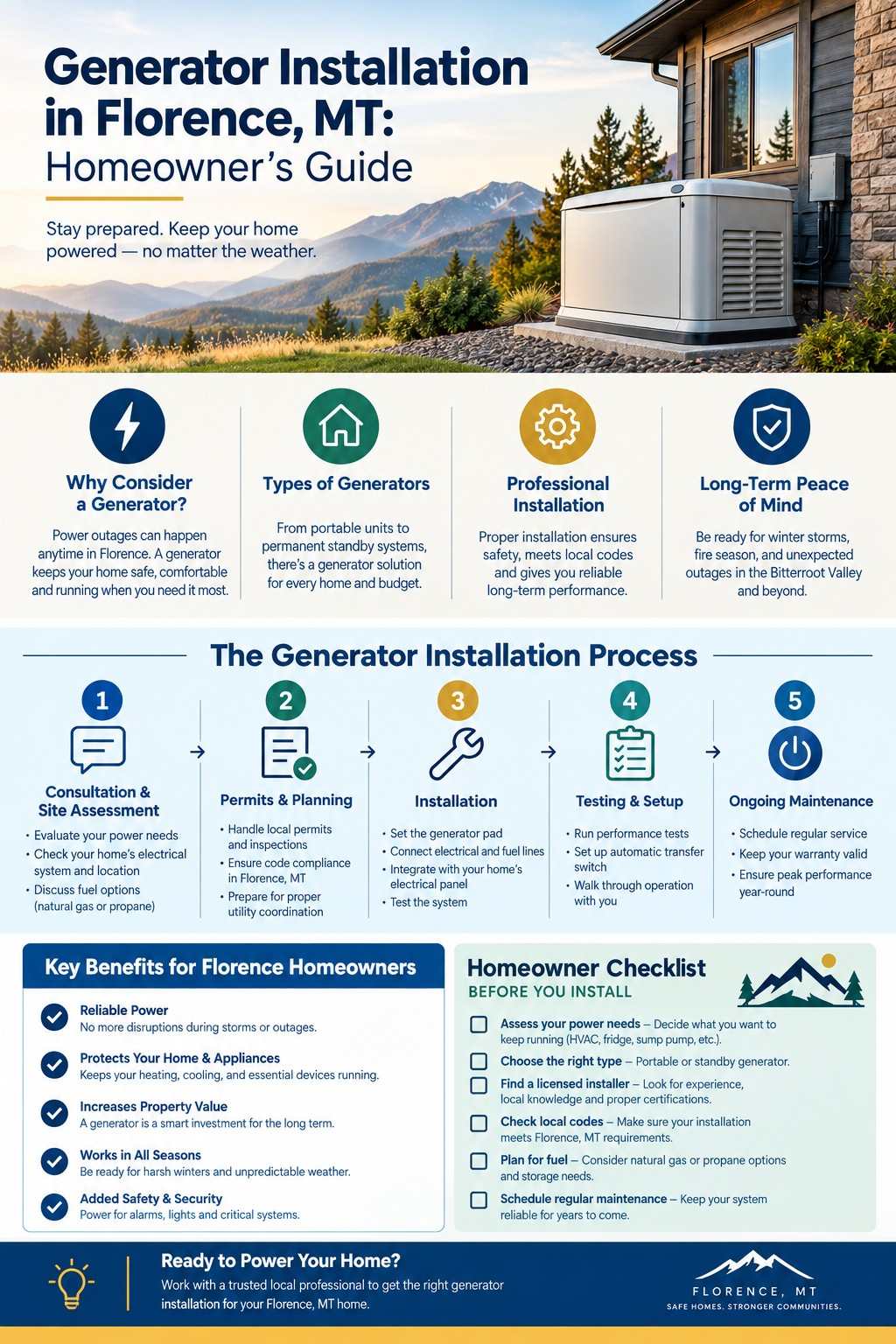
Step 1: Site Evaluation & Load Calculation
Generator installation starts with a site visit where the electrician measures your home’s total electrical load, reviews your existing panel, and identifies a compliant outdoor location for the unit, one that meets required clearances from windows, doors, and property lines. This step determines what size generator you actually need, rather than guessing based on square footage alone.
Step 2: Choosing a Transfer Switch
Next, the electrician selects and sizes an automatic or manual transfer switch, which is the component that safely isolates your home from the utility grid before generator power is engaged. This prevents backfeeding power onto utility lines, which is both a code violation and a serious safety hazard to line workers.
Step 3: Gas Line & Fuel Setup
For propane or natural gas units, a licensed technician sizes and runs the fuel line to the generator’s location, coordinating with a propane supplier or gas utility as needed. Fuel line sizing has to account for BTU demand at startup, not just running load, which is a common mistake in DIY installs.
Step 4: Electrical Connection & Panel Tie-In
The electrician runs conduit and wiring from the generator to the transfer switch and ties it into your main panel. On older Florence homes, this step sometimes reveals that the existing panel is undersized or outdated, in which case a panel upgrade is completed alongside the generator install rather than as a separate project later.
Step 5: Permitting & Inspection
Montana requires an electrical permit for generator installation, and the completed work must pass inspection before it’s energized for regular use. A licensed contractor pulls the permit, schedules the inspection, and ensures the install meets the Montana electrical code your local building department enforces.
Sizing Your Generator: How Big Do You Need?
The right generator size for a Florence home depends on which circuits you want to keep running, not just the size of the house. A partial-home system covering well pump, furnace, refrigerator, and a handful of outlets can often run on a smaller unit in the 10–16 kW range, while whole-home coverage for a larger property with electric heat, well pump, and a shop can require 20–26 kW or more. An electrician calculates this with a load worksheet that adds up running watts plus the highest single startup surge, which is usually the well pump or an HVAC compressor. Undersizing is the most common mistake we see corrected during inspections after a DIY or under-scoped install, so this step is worth getting right the first time.
If your panel is already at capacity, review our electrical panel upgrade guide before finalizing generator size.
As an example, a typical 2,400 square-foot Florence home with a private well, propane furnace, refrigerator, and a few small appliance circuits often lands around a 14–18 kW unit for partial-home backup. Add an electric range, a second well or irrigation pump, or a detached shop with its own subpanel, and the load calculation frequently pushes into the 20 kW-plus range. This is why two homes of similar size in the same neighborhood can need noticeably different generator sizes, the equipment behind the walls matters more than the square footage on the listing.
Common Generator Installation Mistakes in the Bitterroot Valley
The most frequent problem we find on generator systems installed by unlicensed installers or big-box retailers is undersizing for well pump startup surge, which causes the unit to stall or shut down exactly when it’s needed most. A close second is placing the unit inside required clearance distances from windows, doors, or the property line, which fails inspection and can create a carbon monoxide hazard. We also regularly see transfer switches wired without a proper interlock, which risks backfeeding the utility grid, a serious safety issue for anyone working on the lines during an outage. Each of these is avoidable with a proper load calculation and a licensed installer pulling the required permit up front rather than treating inspection as an afterthought.
What to Expect on Generator Installation Day
On install day, the crew sets the generator pad and unit in the pre-approved outdoor location, runs conduit and wiring between the generator, transfer switch, and main panel, and connects the fuel line if it wasn’t already run during a prior site visit. Your home’s power is typically interrupted for a short window while the transfer switch is tied into the panel, similar to a standard panel upgrade. Once wiring is complete, the electrician tests the automatic start sequence, confirms the transfer switch correctly isolates the home from the grid, and walks you through the unit’s self-test schedule and manual controls before the final inspection is scheduled.
Fuel Type Options: Propane vs. Natural Gas vs. Diesel
Most Florence homes run standby generators on propane, since the area isn’t served by natural gas utility lines the way parts of Missoula are. Propane is stored on-site in a tank, gives predictable run time you control, and performs reliably in cold weather. Where natural gas service is available, it offers unlimited run time without refueling, but that option is limited outside Missoula’s gas utility footprint. Diesel is mainly used for larger commercial or industrial standby systems rather than residential installs, since it needs more maintenance and isn’t as clean-burning for smaller units.
Automatic vs. Manual Transfer Switches
An automatic transfer switch (ATS) detects a utility outage, starts the generator, and switches your home’s power source within seconds, with no action required from you. A manual transfer switch is less expensive but requires someone to physically flip it during an outage, which is a real gap if a storm hits while you’re away from the property. For most full-time Florence residences, especially those with well pumps, an ATS is the safer and more reliable choice.
Intermittent power issues before an outage are sometimes a sign of a failing switch or panel component rather than a utility problem,our electrical service troubleshooting page covers how to tell the difference.
Montana Permits and Code Requirements for Generator Installation
Generator installation in Montana falls under the state electrical code, and it always requires a permit and inspection, regardless of generator size. Requirements cover minimum clearance from the home and property lines, proper grounding and bonding, transfer switch listing, and fuel line separation from electrical conduit. Homeowners planning a generator alongside a broader remodel should also see our overview of Montana electrical code for remodels, since combining permits for both projects can simplify inspection scheduling.
How Much Does Generator Installation Cost in Florence, MT?
Generator installation cost in Florence, MT typically depends on generator size, fuel type, panel condition, and how far the unit sits from the panel and fuel source. A partial-home propane standby system is generally less expensive than a full whole-home system sized for electric heat or a shop. Site conditions matter too, a longer trench for gas line or conduit, or a panel that needs upgrading first, adds to the total.
For a project-specific number, our team provides a written estimate after the site evaluation, and you can compare it against general electrician pricing on our Missoula electrician cost guide.
Several factors move the final price up or down for a Florence property:
- Generator size (kW), partial-home units cost less than whole-home units
- Fuel type and whether a new propane tank or gas line is required
- Distance between the generator pad, the fuel source, and the main panel
- Whether the existing electrical panel needs to be upgraded first
- Site conditions, including trenching through landscaping, gravel, or rock
- Permit and inspection fees set by the local building department
Because these variables swing the total meaningfully, we recommend treating any online price range as a rough starting point and getting a written, site-specific quote before budgeting for the project.
Choosing a Licensed Electrician for Your Generator Install
Generator installation touches your main panel, grounding system, and utility interconnection, so it should only be performed by a licensed, insured electrical contractor, not a handyman or the generator retailer’s installation crew alone. In Montana, that means confirming the contractor holds a state electrical contractor license and that the individual doing the work holds the appropriate electrician license for the job.
Our guide on how to find a licensed electrician in Missoula walks through the specific questions to ask before you sign a contract. Marrow Electric serves Florence as part of our Missoula and Hamilton service areas, with a master electrician on every generator install.
Generator Maintenance Tips for Bitterroot Valley Winters
- Run a self-test cycle monthly so the unit starts reliably when a real outage hits
- Keep the propane tank above 30% through winter, since cold weather increases startup demand
- Clear snow and ice from around the unit’s intake and exhaust before each storm season
- Have the transfer switch and connections inspected annually, not just the generator engine
- Address any breaker tripping or flickering issues promptly, see our home electrical safety checklist for Florence
A generator that hasn’t been serviced is one of the most common reasons a backup system fails during the exact outage it was installed for, so routine maintenance isn’t optional if you want it to work when needed. Our full home electrical safety checklist for Florence, MT covers other warning signs worth checking alongside your generator.
Why Homeowners in Florence Choose Marrow Electric
Marrow Electric is a family-owned, full-service electrical contractor serving Missoula and the entire Bitterroot Valley, including Florence, Stevensville, Hamilton, and Victor. Every generator installation is handled by a master electrician with two decades of experience across residential, remodel, and new construction projects, so sizing, panel work, and permitting are handled by one accountable team rather than split between a generator retailer and a separate electrician.
If your power issues need faster attention than a scheduled install, our emergency electrician page explains what qualifies as an emergency call. When you’re ready to move forward, request a free estimate and we’ll schedule a site visit.
Frequently Asked Questions
Do I need a permit to install a standby generator in Montana?
Yes. Montana requires an electrical permit and inspection for standby generator installation, regardless of the generator’s size or fuel type. A licensed contractor pulls the permit and schedules the required inspection as part of the installation.
How long does generator installation take?
A typical residential standby generator installation in the Florence, MT area takes one to three days of on-site work, depending on panel condition, fuel line length, and whether a panel upgrade is needed. Permitting and inspection scheduling can add additional calendar time beyond the physical install.
What size generator do I need for a Florence, MT home?
Most Florence homes need somewhere between 10 kW for partial-home backup and 20, 26 kW or more for whole-home coverage, but the correct size depends on a load calculation of your specific circuits, well pump, and HVAC equipment rather than square footage alone.
Can I install a generator myself?
Connecting a generator to your home’s electrical panel requires a licensed electrician, since improper installation risks backfeeding power onto utility lines, code violations, and voided generator warranties. Portable generators used with a manual transfer switch still require a licensed transfer switch installation to be used safely.
Does a generator increase my home’s value?
A properly installed, permitted standby generator is generally viewed as a desirable feature in rural Montana real estate, particularly for well-water properties, though its effect on resale value varies by buyer and market conditions.
How much does it cost to run a propane generator during an outage?
Propane consumption depends on generator size and how much of the home’s load it’s carrying, but a correctly sized standby unit is generally efficient enough that fuel cost is a minor factor compared to the value of maintaining well water, heat, and refrigeration during an extended outage.
How close to my house can a standby generator be installed?
Montana code and manufacturer specifications set minimum clearance distances from windows, doors, and combustible walls, which typically range from 18 inches to 5 feet depending on the unit and local jurisdiction. An electrician confirms the exact clearance required for your specific generator model and property line setback during the site evaluation.
Will a generator work with an electric vehicle charger?
A whole-home standby generator can be sized to support an EV charger alongside the rest of the house, but it needs to be included in the load calculation up front, since Level 2 chargers draw enough power to meaningfully affect sizing. If you’re planning both a generator and an EV charger, our EV charger installation guide covers what to plan for on the charger side.
Ready to protect your Florence home from the next outage? Request a free generator installation estimate from Marrow Electric, or call (406) 360-8071 to speak with our team directly.
Leave a Reply