
Permit Requirements for Electrical Work in Montana
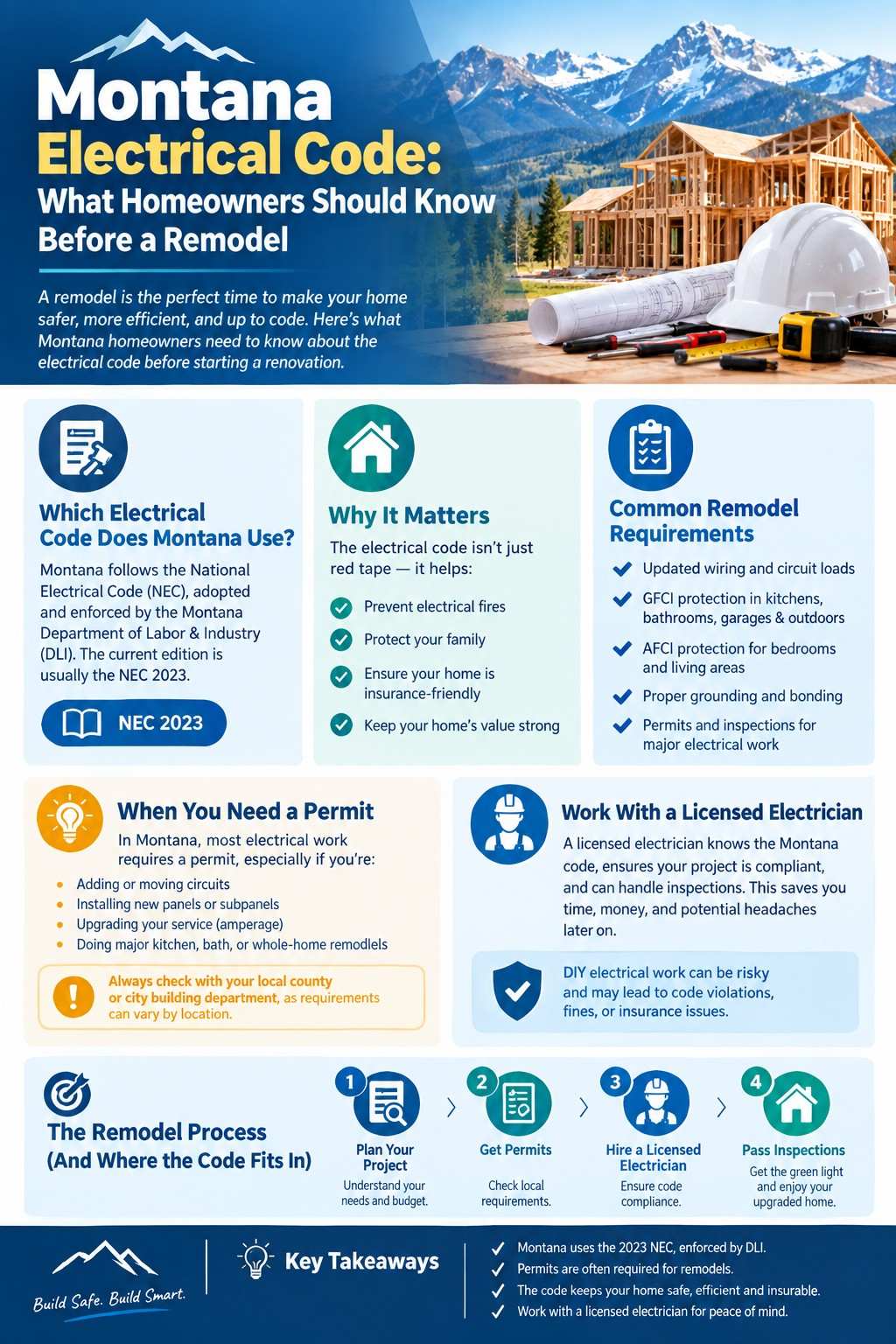
Montana requires an electrical permit for most work that goes beyond swapping a light fixture or replacing a switch with an identical one. If your remodel involves any of the following, a permit is almost always required:
- Adding new circuits or outlets
- Relocating or replacing an electrical panel
- Rewiring any portion of a room during a remodel
- Installing new lighting circuits, ceiling fans with new wiring, or dedicated appliance circuits
- Any work tied to a kitchen or bathroom remodel where wiring is exposed or modified
Permits exist so a certified inspector can verify the work meets code before walls are closed up. Skipping this step doesn’t just risk a fine, it risks a fire hazard being sealed behind drywall where no one will find it until something goes wrong.
In most Montana municipalities, including Missoula, permit applications and inspections are handled through the local building department, and only a licensed electrical contractor can pull an electrical permit for work beyond minor repairs. This is where many homeowners get tripped up: they assume their general contractor’s building permit covers the electrical work too. It doesn’t.
A typical remodel involves at least two inspections tied to the electrical scope: a rough-in inspection after wiring is run but before drywall goes up, and a final inspection once devices, fixtures, and the panel are complete. Scheduling these at the right point in the project timeline matters, if drywall goes up before the rough-in inspection is signed off, the inspector can require it to be opened back up, which adds cost and delays that a licensed electrician typically knows how to avoid.
When a Licensed Electrician Is Legally Required (Not Just Recommended)
General contractors are skilled at framing, drywall, and finish work, but Montana law draws a hard line when it comes to electrical systems. A general contractor is not licensed to perform electrical work themselves, that requires a state-licensed electrician, and for anything beyond the most minor tasks, a permit pulled under that electrician’s license.
A licensed electrician is legally required for:
- Any new circuit installation or panel work
- Service upgrades (increasing amperage, replacing an outdated fuse box)
- Rewiring during a remodel, addition, or renovation
- Work in wet or high-risk areas like bathrooms, kitchens, and exterior circuits
- Anything connected to load calculations, grounding, or GFCI/AFCI protection required by current code
If a general contractor’s crew handles wiring themselves without a licensed electrician involved, that work is not code-compliant even if it “looks fine.” It also won’t pass inspection, and it can jeopardize your homeowner’s insurance if there’s ever an electrical fire traced back to unlicensed work.
It’s worth asking any contractor directly, before signing a contract, who on the job is licensed to pull the electrical permit. A reputable general contractor will either subcontract to a licensed electrician or tell you upfront that you need to hire one separately. If they say the electrical work doesn’t need a permit or a license, that’s a red flag worth pushing back on.
Common Code Violations in Older Missoula and Bitterroot Valley Homes
A large share of the housing stock across Missoula and the Bitterroot Valley was built well before current code existed, which means remodels frequently uncover issues that were fine decades ago but don’t meet today’s standard. The most common violations we find include:
- Ungrounded two-prong outlets still in use, especially in homes built before the 1960s
- Missing GFCI protection in kitchens, bathrooms, garages, and outdoor outlets
- Missing AFCI protection on bedroom and living area circuits, now required in most remodel scopes
- Overloaded panels, too many circuits added over the years without a service upgrade
- Aluminum wiring from the 1960s-70s, which requires special connectors to be safe
- Knob-and-tube wiring, still found in some older Missoula homes and generally not permitted to remain in place during a remodel
- Junction boxes buried behind drywall instead of left accessible, a common DIY-era violation
Older homes in this region often went through multiple rounds of informal updates over the decades, a new outlet here, a rerouted circuit there, without permits or inspections. Once a remodel opens the walls, code requires these issues to be brought up to current standard, not just left as-is.
This is one of the biggest reasons remodel budgets creep upward once demolition starts. What looked like a straightforward kitchen update can turn into a panel upgrade, several new circuits, and rewiring a section of the house once an electrician sees what’s actually behind the walls. Getting a licensed electrician to assess the home before the remodel begins, not after the drywall is already down, gives you a much more accurate budget and timeline from the start.
What Happens If Unpermitted Electrical Work Is Found During a Home Sale
Unpermitted electrical work is one of the most common surprises that surfaces during a real estate transaction, and it can derail a sale fast. Here’s what typically happens:
- The home inspector flags visible signs of non-permitted work, such as mismatched wiring, missing GFCI/AFCI protection, or panel modifications that don’t match county permit records
- Buyers’ lenders may require the issue to be corrected and permitted before closing, especially for FHA or VA loans
- Sellers can be required to open walls, pull retroactive permits, and pay for a licensed electrician to bring the work up to code before the deal closes
- Unpermitted work discovered after closing can become a liability dispute between buyer and seller, sometimes ending up in real estate disclosure litigation
- Insurance claims tied to electrical fires can be denied if the work involved is found to be unpermitted or non-code-compliant
The cost of fixing an unpermitted electrical issue during a sale is almost always higher than the cost of doing it right the first time, rushed timelines, exposed walls, and pressure from a pending closing date rarely make for cheap repairs. Retroactive permitting also isn’t guaranteed to succeed; if the work doesn’t meet current code, the inspector can require it to be redone rather than simply documented after the fact, which means the walls come open a second time regardless of what it cost to close them up originally.
Do It Right the First Time
Montana electrical code exists to keep homes safe, and remodels are exactly when small oversights turn into major violations. Whether you’re updating a single room or taking on a full renovation, working with a licensed electrical contractor from the start means permits are pulled correctly, inspections are scheduled at the right stage, and nothing gets buried behind drywall that shouldn’t be there.
If your remodel touches wiring, panels, or outlets, it’s worth having a licensed electrician assess the scope before work begins. Marrow Electric’s residential remodel electrical services cover everything from code compliance checks to full rewiring for homes across Missoula and the Bitterroot Valley.
FAQs
1. What is the Montana electrical code?
Montana electrical code is based on the National Electrical Code (NEC), along with state-specific amendments and requirements enforced by the appropriate local building department. Electrical work during a remodel may need to meet current code requirements.
2. Do I need an electrical permit for a remodel in Montana?
Yes, many remodeling projects require an electrical permit, especially when adding circuits, outlets, lighting, panels, or rewiring existing areas. Permit requirements can vary by location, so homeowners should confirm requirements with the local building department or a licensed electrical contractor.
3. Can a general contractor do electrical work in Montana?
Electrical work that requires licensing and permitting generally needs to be performed or supervised by an appropriately licensed electrical professional. Before hiring a contractor, ask who will handle the electrical work and who will pull the required electrical permit.
4. What electrical code violations are common in older Missoula homes?
Common issues include ungrounded outlets, missing GFCI or AFCI protection, overloaded electrical panels, outdated wiring, aluminum wiring, knob-and-tube wiring, and junction boxes that are inaccessible or improperly concealed.
5. Does remodeling an older home require the electrical system to meet current code?
It depends on the specific work and applicable local requirements. When walls are opened or electrical systems are modified, certain portions of the existing electrical system may need to be upgraded to meet current code. A licensed electrician can identify potential issues before demolition begins.
Ready to make sure your remodel is code-compliant from day one? Schedule a code-compliance consultation with Marrow Electric before you break ground, we’ll walk your project, flag any existing violations, and handle the permitting so your remodel passes inspection the first time.
Leave a Reply