
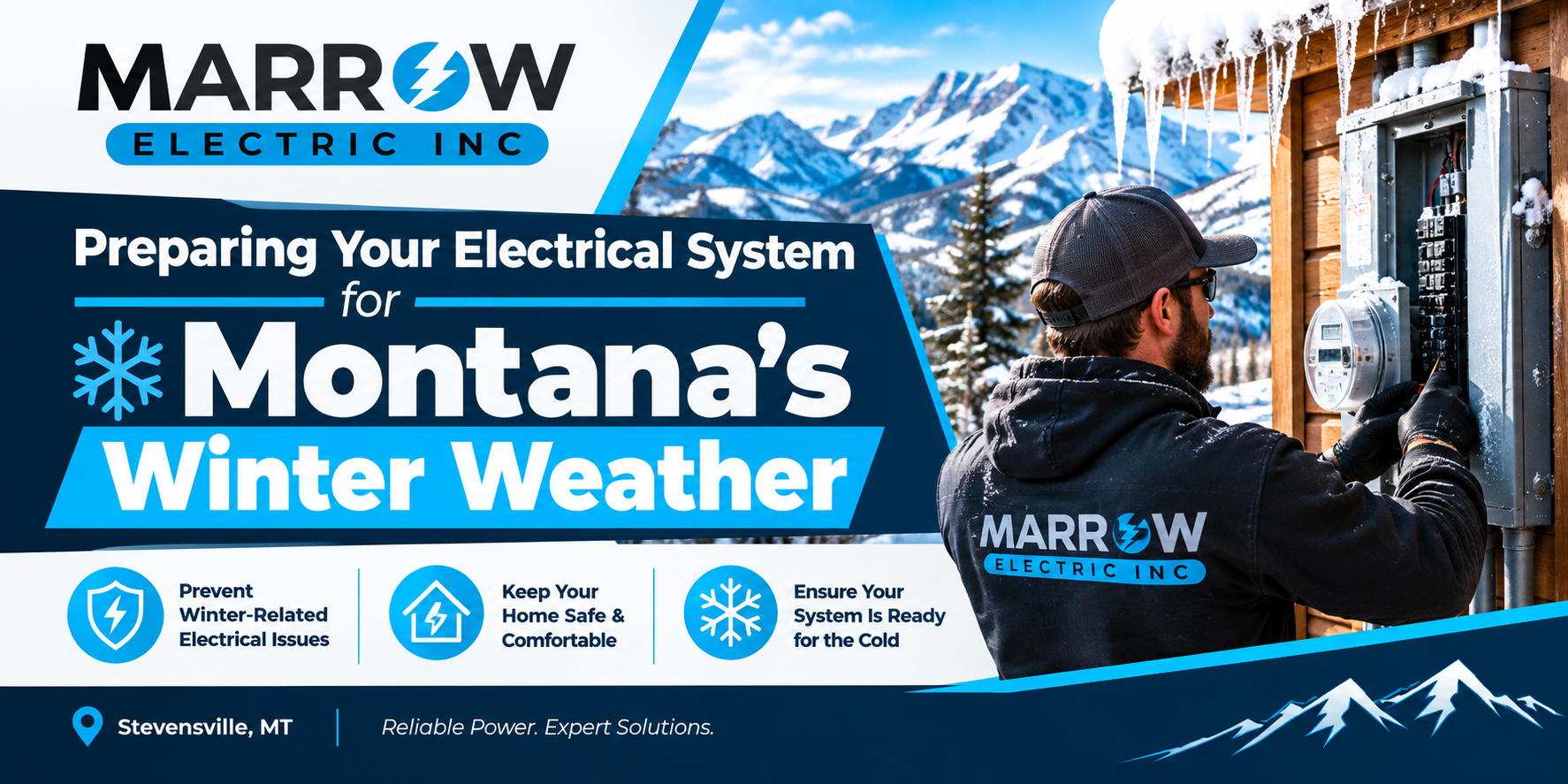
Montana winters do not ease in gently. One week you are enjoying a crisp fall evening, and the next you are watching a wind-driven snowstorm bend tree limbs over power lines. For homeowners in Missoula, the Bitterroot Valley, Florence, and Stevensville, the electrical system is one of the first things to feel the strain. Cold stiffens cords, heaters run for months, generators come out of storage, and the grid itself works harder than at any other time of year.
The good news is that most winter electrical problems can be prevented. A few hours of inspection and planning in October or November can protect your family, your equipment, and your wallet. This guide walks through exactly how to prepare your electrical system for Montana’s winter weather, from checking extension cords and heaters to planning safe backup power and knowing what to do when the lights go out. If you want a licensed professional to look at your home first, our team at Marrow Electric is here to help.
Quick Answer: How Do You Prepare Your Electrical System for Winter in Montana?
To prepare your home’s electrical system for a Montana winter, you should:
- Inspect and replace damaged extension cords and outdoor cords.
- Test outdoor lighting, outlets, and GFCI protection.
- Inspect electric heaters, baseboards, switches, and outlets for discoloration, looseness, or crackling.
- Consider burying vulnerable overhead service lines and adding surge protection.
- Place portable generators outdoors, at least 20 feet from windows, doors, and garages, and keep them dry.
- Charge lithium power stations indoors ahead of storms.
- Stagger high-draw appliances and lower your thermostat slightly during outages.
- Call a licensed electrician for anything that looks scorched, loose, noisy, or overloaded.
The rest of this article explains each step in detail, so you know what to look for and when to bring in a professional.
Why Montana’s Winter Is Hard on Home Electrical Systems
Electrical systems are designed to handle heat and load, but winter adds a mix of stresses that most homeowners do not think about until something fails.
Extreme Cold Changes How Materials Behave
Rubber and plastic insulation on cords and cables becomes stiff and brittle in very low temperatures. A cord that felt flexible in August can crack when you uncoil it on a January morning. Once insulation splits, bare conductors can be exposed to moisture, which raises the risk of shock, short circuits, and fire.
Heating Loads Run Longer and Harder
Baseboard heaters, space heaters, heat pumps, well pump heaters, and heat tape all draw more power in winter, often for weeks without a break. Any loose connection or overloaded circuit that survived the summer can overheat under constant winter use. If your breakers already trip occasionally, read our guide on flickering lights and tripping breakers, because winter often turns a minor warning sign into a real problem.
Snow, Ice, and Wind Threaten Overhead Lines
Heavy snow and ice add weight to lines and trees. High winds push branches into service drops, and a single snapped line can leave a home without power for hours or days. Rural properties in the Bitterroot Valley and outlying areas are often last in line for restoration, which makes household preparation even more important.
The Grid Itself Is Under Pressure
When temperatures drop, everyone turns up the heat at the same time. Local utilities such as Missoula Electric Cooperative publish winter weather and grid reliability guidance for exactly this reason. Understanding how your own usage affects demand during severe cold is part of being a good neighbor and keeping your own lights on.
Step 1: Inspect Extension Cords and Outdoor Equipment
This is the easiest place to start, and it is where many winter electrical fires begin. Walk around your property with a flashlight and a notepad and check every cord, light, and outdoor outlet.
Check Every Extension Cord
Pull out every extension cord you plan to use this winter, including those for holiday lights, block heaters, snow equipment, and workshop tools. Look for:
- Cracked, split, or stiff insulation
- Frayed ends or exposed copper
- Bent or loose plug prongs
- Discoloration or melted spots near the plug
- Cords that feel warm during use
Replace any damaged cord instead of repairing it with tape. For outdoor use, choose cords rated for outdoor and cold-weather use, and match the cord gauge to the load. Thin cords powering high-wattage heaters or tools are a common cause of overheating.
Extension cords are meant to be temporary. If you find yourself running cords all winter to power a garage heater, an engine block heater, or a shop, that is a sign you need permanent wiring. A properly installed outlet or circuit is safer. Our article on dedicated circuits and the appliances that may need one explains when a permanent circuit makes more sense than a cord.
Examine Outdoor Lights and Fixtures
As daylight hours shrink, your exterior lighting matters more for safety. Test your entryway, driveway, garage, and walkway lights now, while the weather is still manageable. Replace burned-out bulbs, tighten loose fixtures, and look for cracked housings that could let in snow and moisture.
Also clear snow and debris away from outdoor vents and fixtures. Blocked vents and buried fixtures can overheat or trap moisture. If you are planning upgrades, such as motion-activated security lights, pathway lighting, or LED fixtures designed for cold climates, read our indoor and outdoor lighting installation guide for ideas that suit Montana homes.
Test Outdoor Outlets and GFCI Protection
Outdoor outlets should have ground-fault circuit interrupter (GFCI) protection and weatherproof in-use covers. Press the test and reset buttons on each GFCI outlet. If a GFCI will not trip when tested or will not reset, it needs to be replaced. Outlets that are cracked, loose in the wall, or full of ice and moisture should be inspected by a licensed electrician before you plug anything into them.
Step 2: Test and Inspect Your Heating Equipment
Your heating system is the largest electrical load many homes carry in winter. Checking it before you rely on it every day is one of the smartest steps you can take.
Baseboard Heaters and Electric Wall Heaters
Before regular seasonal use, vacuum dust from the heating elements and make sure nothing blocks airflow. Furniture, curtains, and bedding should stay clear of baseboard heaters. Then turn each heater on and look and listen for warning signs, including:
- A burning smell that does not fade after the first few minutes of seasonal use
- Discoloration on the heater, wall, or faceplate
- Crackling, buzzing, or popping sounds
- Switches or thermostats that feel hot or loose
- Outlets or receptacles that are loose or warm to the touch
A small amount of dust burning off in the first hour of the season is normal. Persistent odors, noises, or heat damage are not. If you spot any of them, turn the heater off at the breaker and call a qualified electrician.
Portable Space Heaters
Plug space heaters directly into a wall outlet, never into a power strip or a light-duty extension cord. Keep them on a flat, hard surface away from anything flammable, and never leave them running unattended or while you sleep. Choose models with tip-over and overheat shutoff features. If the plug or outlet gets warm, stop using the heater and have the circuit checked, since that often signals a loose connection or an overloaded circuit.
Heat Tape, Well Pumps, and Other Cold-Weather Equipment
Many Montana homes rely on heat tape on water lines, heated pump houses, or heated livestock waterers. Inspect heat tape for cracks and damage before plugging it in, and follow manufacturer instructions exactly. Heat tape that is damaged, overlapped, or installed incorrectly can cause fires. Make sure these devices are on properly rated circuits and are not sharing an already overloaded outlet.
Home safety checks are most effective when you look at the whole house. Our guide to 12 home electrical safety problems to check can help you build a full walk-through checklist.
Step 3: Check Your Electrical Panel and Wiring
Your panel is the heart of the system. Winter is when weak spots become obvious, so spend a few minutes looking at it.
Warning Signs at the Panel
With the panel cover on, look and listen for:
- Breakers that trip repeatedly
- Buzzing, humming, or crackling sounds
- Warm or hot panel covers or breakers
- A burning smell near the panel
- Rust, moisture, or water stains near the panel
Never remove the panel cover yourself. If you notice any of these signs, contact a licensed electrician. If you are unsure whether your panel can handle the added load of winter heating, EV charging, a hot tub, or a workshop, ask for a load evaluation. Our post on how much a panel upgrade costs in Missoula explains what drives pricing and when an upgrade makes sense.
Know Where Your Main Shutoff Is
Every adult in your household should know where the main breaker is and how to turn it off. During a storm, a downed line, a flooded basement from a thaw, or an electrical fire, being able to cut power quickly can prevent injuries. Label your breakers clearly so you are not guessing in the dark.
Consider Surge Protection
Winter storms, utility switching, and the return of power after an outage can create voltage spikes. Whole-home surge protection installed at the panel helps protect appliances, HVAC equipment, and electronics. It is a relatively small investment compared with replacing a furnace control board, refrigerator, or computer equipment.
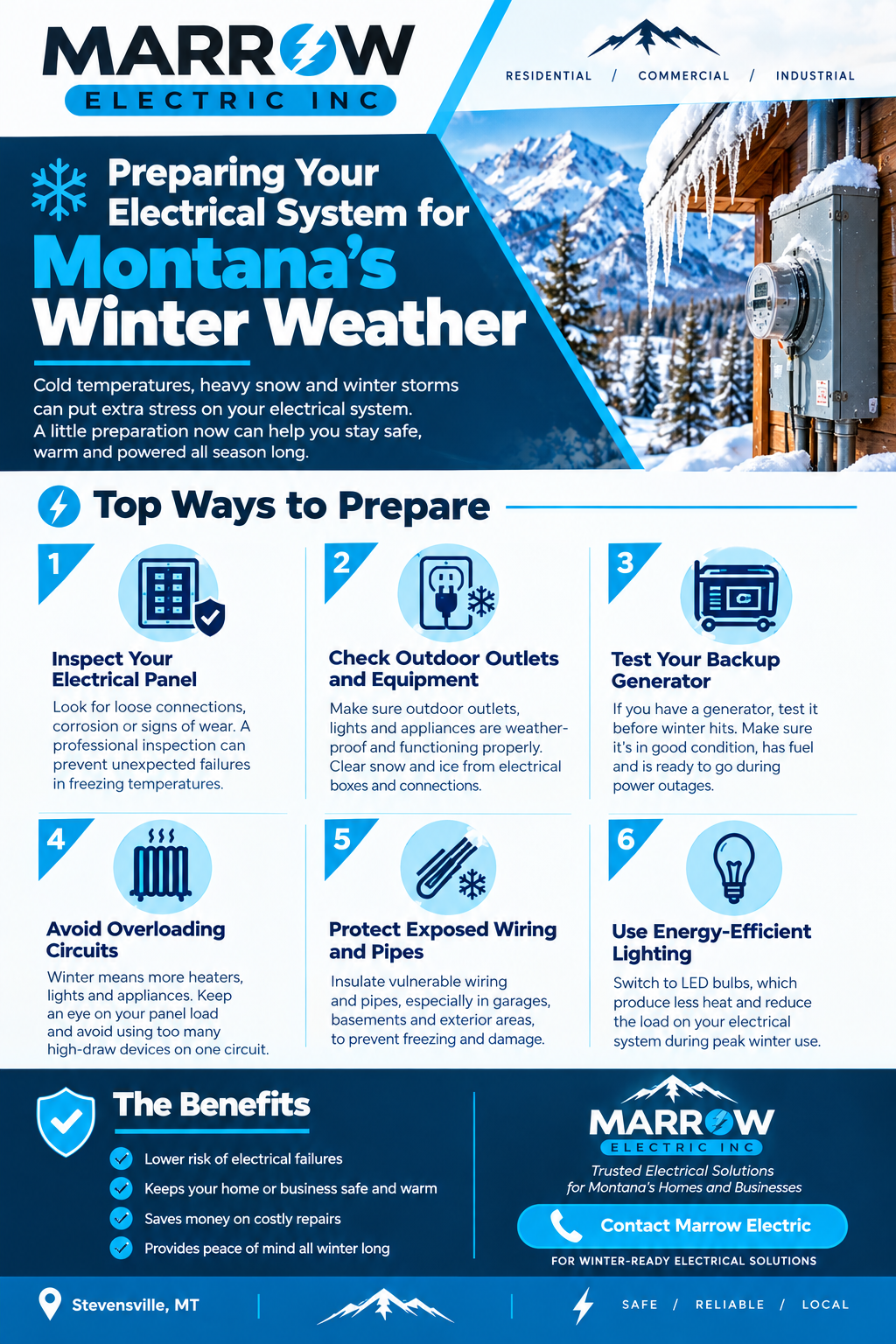
| # | Winter Electrical Safety Check | What to Do |
|---|---|---|
| 01 | Inspect Extension Cords | Replace cracked, frayed, stiff, or damaged cords. Use outdoor-rated cords suitable for cold weather. |
| 02 | Check Outdoor Lights and Outlets | Test exterior lights and GFCI outlets. Look for cracked fixtures, moisture, and loose outlet covers. |
| 03 | Inspect Heating Equipment | Clean heaters, keep them clear of furniture and curtains, and watch for persistent burning smells or unusual noises. |
| 04 | Check the Electrical Panel | Watch for repeated breaker trips, buzzing, burning smells, heat damage, or moisture. Never remove the panel cover yourself. |
| 05 | Review Surge Protection | Consider whole-home surge protection to help protect appliances and electronics from voltage spikes. |
| 06 | Prepare Backup Power | Plan for outages. Operate portable generators outdoors at least 20 feet from windows, doors, and garages. |
| 07 | Protect Portable Power Stations | Charge batteries indoors before storms and follow the manufacturer’s temperature and charging instructions. |
| 08 | Check Overhead Service Lines | Look for visible hazards from a safe distance. Never trim branches near power lines; contact your utility. |
| 09 | Test Safety Alarms | Test smoke and carbon monoxide alarms, and replace batteries when needed. |
| 10 | Prepare an Outage Kit | Keep flashlights, batteries, charged power banks, warm clothing, blankets, water, and emergency contacts accessible. |
| 11 | Manage Electrical Loads | Avoid running several high-power appliances at once, especially when power returns after an outage. |
| 12 | Schedule an Electrical Inspection | Contact a licensed electrician for recurring breaker trips, damaged outlets, unusual electrical sounds, or generator installation. |
Step 4: Upgrade and Protect Your Electrical Infrastructure
Some of the best winter protection comes from permanent improvements instead of seasonal checks.
Consider Underground Wiring for Vulnerable Service Lines
Overhead service drops are exposed to ice buildup, high winds, and falling branches. Converting a vulnerable overhead service to an underground installation can reduce the risk of damage from those hazards. Underground conduit must be buried at the depth required by code and by your utility, which often takes frost depth and local conditions into account. Because depth, conduit type, and utility coordination all matter, this is a job for a licensed electrician who works with your local provider.
Underground work often involves permits and inspections. If you are unsure what needs one, read our guide on what electrical work requires a permit in Montana.
Trim Trees Near Service Lines, the Safe Way
Trees near your service drop are a frequent cause of winter outages. Do not trim branches near power lines yourself. Contact your utility, which can handle vegetation near energized lines, or hire a qualified professional with the right training. Staying well clear of anything that could touch a line is a basic rule of safety.
Plan for Added Loads Before Winter
If you are adding a hot tub, EV charger, electric heat, or a shop, plan the electrical work before cold weather arrives. Trenching and outdoor work become harder and more expensive once the ground is frozen. Our article on hot tub electrical installation in Missoula and the Bitterroot Valley shows what is involved in sizing, wiring, and protecting a major new load.
Consider Permanent Backup Power
If outages in your area tend to last a long time, a standby generator with an automatic transfer switch can keep heat, refrigeration, and well pumps running without extension cords and without you going outside in a blizzard. Learn what is involved in our generator installation guide for homeowners.
Step 5: Use Backup Power Safely
Backup power saves homes every winter, and it also causes injuries every winter when it is used incorrectly. Follow these rules.
Portable Generator Safety
Portable generators produce carbon monoxide, an odorless gas that can be fatal in minutes inside a home. The Montana Disaster and Emergency Services office offers winter storm preparedness guidance, and the key rules are consistent across safety agencies:
- Run generators outdoors only, never in a garage, basement, crawl space, or porch
- Keep the generator at least 20 feet from windows, doors, and garages, with the exhaust pointed away from the house
- Keep it dry, using a proper canopy or generator tent designed for the purpose, and never operate it in standing water
- Let it cool before refueling, and store fuel safely outside living spaces
- Install battery-powered or plug-in carbon monoxide alarms with battery backup in your home
Never plug a generator into a wall outlet to power your house. This is called backfeeding, and it can send electricity back onto utility lines and injure or kill line workers. If you want to power circuits directly, have a licensed electrician install a transfer switch or interlock that meets code.
Size Your Generator Properly
A generator that is too small will overload, shut down, or damage equipment. Add up the running and starting watts of the items you need most, such as the furnace blower, refrigerator, freezer, well pump, a few lights, and phone chargers. Many motor-driven appliances draw several times their running wattage when they start. If you are not sure how to size a unit, an electrician can complete a load calculation for your home.
Portable Power Stations (Jackery, EcoFlow, and Similar)
Lithium portable power stations are popular for short outages, but they have a cold-weather limitation many people miss. Most modern units automatically block charging when internal temperatures are below freezing (32°F), which means a station left in a cold garage may not charge when you need it. Instead:
- Charge the unit indoors before storms are forecast
- Store it in a space that stays above freezing
- Check the manufacturer’s operating and charging temperature range
- Keep it away from heat sources and do not charge it on flammable surfaces
Power stations are quiet, indoor-safe in terms of exhaust, and great for charging phones, running a router, or powering a CPAP machine. They are not designed to run an entire electric furnace.
Step 6: Manage Electricity Demand During Outages and Severe Cold
How you use power during and right after an outage affects both your home and the grid.
Stagger High-Draw Appliances
Ovens, clothes dryers, dishwashers, electric water heaters, and space heaters all pull a lot of power. Running several at once can overload a circuit, trip breakers, or strain local lines, particularly when power is first restored and many homes in the area turn everything back on at once. Stagger these appliances, and delay nonessential use during severe cold events.
Turn Down the Thermostat Slightly
Lowering your thermostat a few degrees during severe cold or storm recovery periods reduces overall demand and can help stabilize the grid. Use layers, blankets, and closed-off rooms to keep heat where you are. Utilities such as Missoula Electric Cooperative encourage members to conserve during peak demand, and small reductions across many homes add up. Never use a gas oven, grill, or camp stove to heat your home, because of the carbon monoxide risk.
When the Power Returns
When power comes back on, turn on appliances one at a time instead of all at once. Consider unplugging sensitive electronics during the outage and plugging them back in after voltage stabilizes. If you notice flickering, dimming, burning smells, or tripped breakers after power returns, shut down the affected circuit and call an electrician. For urgent situations, see our guide on what counts as an electrical emergency in Missoula.
Step 7: Build a Winter Power Outage Kit
Electrical preparation also means being ready when the electricity is simply gone. Keep these items in an easy-to-reach place:
- Flashlights and headlamps with extra batteries (avoid candles whenever possible)
- A battery-powered or hand-crank radio
- Fully charged power banks and a charged portable power station
- Carbon monoxide alarms with battery backup
- Extra blankets, warm clothing, and sleeping bags rated for cold
- Nonperishable food, water, and a manual can opener
- A list of important phone numbers, including your utility and your electrician
- A full tank of fuel for your vehicle, which can also charge phones in an emergency, with the vehicle outdoors and the exhaust clear of snow
Check on neighbors, especially older adults and anyone who depends on electrically powered medical equipment. Anyone who relies on that kind of equipment should have a backup plan well before winter starts.
Your Montana Winter Electrical Checklist
Use this quick list before the first big storm:
- Inspect and replace damaged extension cords
- Test outdoor lights, outlets, and GFCIs
- Clean and inspect baseboard and electric heaters
- Check space heaters, heat tape, and pump heaters
- Look for warning signs at the panel and label your breakers
- Install or review whole-home surge protection
- Review overhead service lines and nearby trees, and contact your utility about hazards
- Plan generator placement, fuel, and a safe connection method
- Charge power stations and keep them indoors
- Test carbon monoxide and smoke alarms
- Prepare an outage kit and a plan for staggering appliances
- Save your electrician’s number where everyone can find it
When to Call a Licensed Electrician
Some problems are not DIY fixes. Call a licensed electrician if you notice:
- Scorched outlets, switches, or faceplates
- Breakers that trip repeatedly or will not reset
- Lights that flicker across the house
- A burning smell with no obvious source
- Buzzing or crackling from the panel, outlets, or heaters
- Water in any electrical equipment or panel
- A damaged service mast, meter base, or overhead line (stay away and call your utility first)
- Plans to add a generator, transfer switch, underground service, hot tub, EV charger, or other large load
If you see a downed power line, stay far away from it and anything touching it, and call 911 and your utility. Treat every downed line as live.
Working with a licensed local electrician matters in Montana. They know local codes, frost conditions, permit requirements, and how to coordinate with your utility. Not sure who to hire? Our guide on what to know before hiring an electrician in Stevensville covers licensing, insurance, quotes, and warranties, and the principles apply anywhere in the Missoula and Bitterroot area. For a visit from our team, see our electrical service and troubleshooting page or contact Marrow Electric to schedule a pre-winter inspection.
Frequently Asked Questions About Winter Electrical Preparation in Montana
How do I get my home’s electrical system ready for winter in Montana?
Start by inspecting extension cords, outdoor lights, outlets, and heaters, and replace anything cracked, frayed, or discolored. Test GFCI outlets, look for warning signs at your panel, review how you will use backup power safely, and charge your power stations indoors. For deeper concerns, such as repeated breaker trips or a possible need for a panel upgrade, schedule an inspection with a licensed electrician before the first storm.
Why do extension cords crack in cold weather?
In extreme cold, rubber and plastic insulation loses flexibility and becomes brittle. Bending or uncoiling the cord can cause tiny cracks that expose the wires inside. Those cracks can lead to shocks, shorts, or fires. Use cords rated for outdoor and cold-weather use, store them indoors when not in use, and replace any that show cracks or stiffness.
How far from my house should a generator be?
Safety agencies, including Montana’s disaster and emergency services, recommend operating portable generators outdoors, at least 20 feet from windows, doors, and garages, with exhaust directed away from the home. Keep the unit dry and never run it inside a garage, even with the door open. Always use carbon monoxide alarms inside your home.
Can I charge a Jackery or EcoFlow power station in a cold garage?
Usually not. Most modern lithium power stations automatically block charging below about 32°F to protect the battery. Charge them indoors ahead of winter storms and store them somewhere that stays above freezing. Check your manufacturer’s temperature range for exact limits.
Is underground wiring better than overhead lines for winter weather?
Underground service eliminates exposure to ice accumulation, high winds, and falling branches, which are common causes of winter outages. It can cost more upfront than overhead service and requires proper depth, conduit, permits, and utility coordination. A licensed electrician can tell you whether it is practical for your property.
Should I lower my thermostat during a power outage or severe cold event?
Lowering your thermostat a few degrees during severe cold or storm recovery periods can reduce strain on the grid. Use layers and blankets and close off unused rooms to keep heat in. Do not use a gas oven, grill, or camp stove for heat, since these can produce deadly carbon monoxide.
Which appliances should I avoid running at the same time?
High-draw appliances like ovens, electric dryers, dishwashers, electric water heaters, and space heaters should be staggered, especially during outages and when power is restored. Running them together can overload a circuit or trip breakers. If you often trip breakers in winter, have an electrician evaluate your circuits and panel.
When should I call an electrician instead of fixing it myself?
Call a licensed electrician for scorched outlets, repeated breaker trips, burning smells, buzzing sounds, water in electrical equipment, or any work involving your panel, service line, generator connections, or major new loads. Electrical work can be dangerous and often requires permits and inspections.
Final Thoughts: Be Ready Before the First Storm
Montana winters are beautiful, but they are unforgiving on electrical systems. The homeowners who get through them with the fewest problems are the ones who act early: they replace worn cords, test heaters, plan backup power safely, protect their panels, and know who to call when something does not look right.
You do not have to do it all alone. If you would like a licensed Missoula-area electrician to inspect your panel, outlets, heating circuits, and outdoor equipment, or help you plan a generator, surge protection, or underground service, reach out to Marrow Electric today and get ready before the snow flies.
Need an Electrician?
Reliable electrical service in Stevensville and the Bitterroot Valley.
Call Marrow Electric65 Goose Ln, Stevensville, MT 59870