Valley Homes Need One
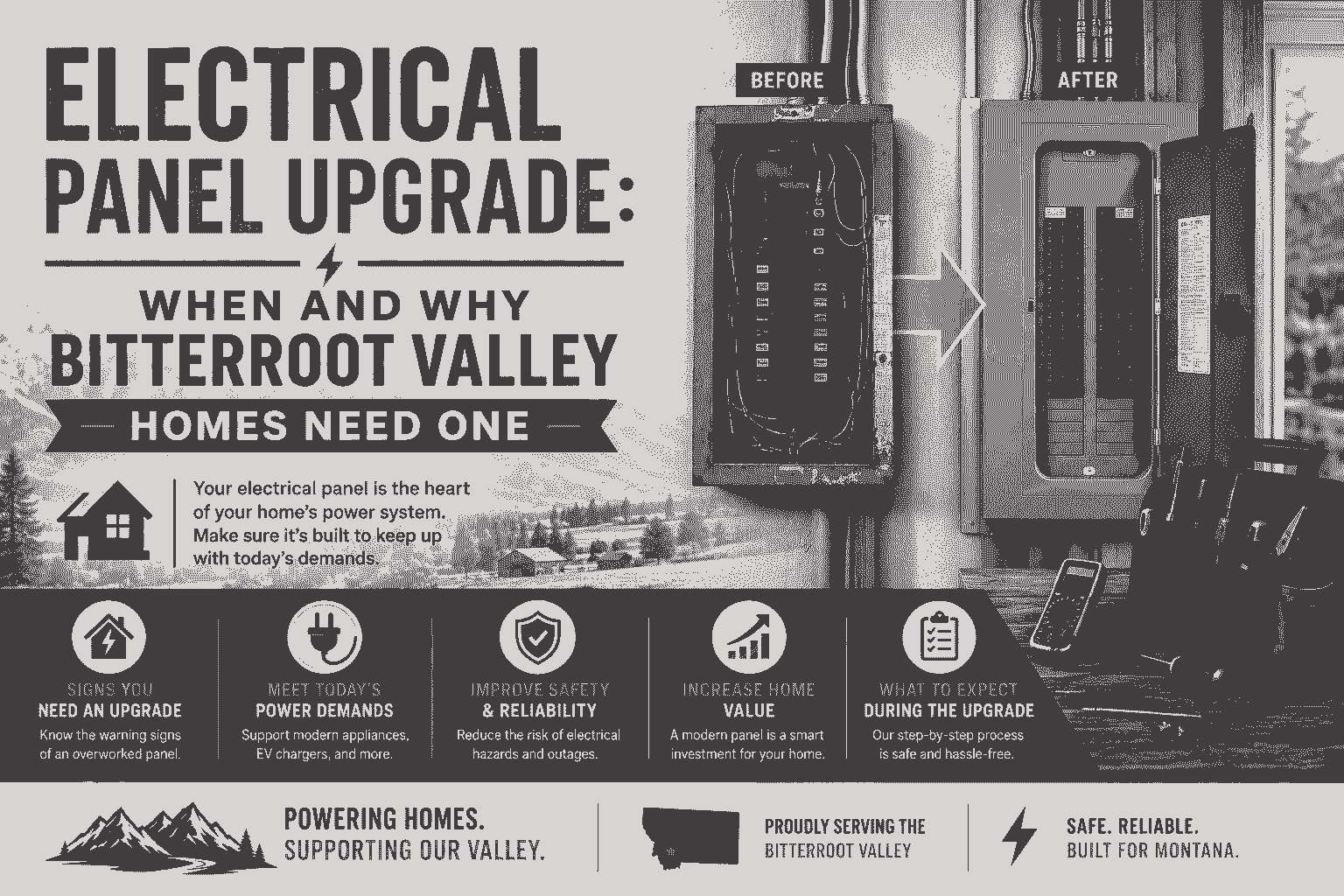
Your electrical panel is the heart of your home’s power system — every circuit in the house runs through it. In the Bitterroot Valley, where a lot of homes were built decades ago and have been added onto or renovated since, it’s common for a panel to be quietly working past its intended capacity. Here’s how to tell if your home needs an upgrade, and why it matters.
What Does an Electrical Panel Actually Do?
The panel takes incoming power from the utility line and distributes it through breakers to every circuit in your home — outlets, lighting, appliances, HVAC, and anything else that draws electricity. As homes add more devices, larger appliances, and things like EV chargers or hot tubs, the demand placed on that panel grows. If the panel wasn’t built to handle that load, it becomes a bottleneck and, in some cases, a safety hazard.
Signs Your Panel May Need an Upgrade
Frequent breaker trips. Occasionally tripping a breaker when you run a lot of appliances at once is normal. Breakers that trip regularly, even under normal use, are a sign the panel is being overloaded. Electrical service troubleshooting can help identify the underlying electrical problem.
Flickering or dimming lights. If your lights dim when a major appliance kicks on, it can point to a panel that’s struggling to keep up with demand.
A fuse box instead of breakers. Many older Bitterroot Valley homes still have original fuse boxes rather than modern circuit breaker panels. Fuse boxes are outdated, harder to work with safely, and often can’t support modern electrical loads.
A panel rated below 100 amps. Older homes were often built with 60-amp or 100-amp service, which was sufficient decades ago but is frequently inadequate for a modern household running multiple large appliances, electronics, and HVAC systems.
Warm or discolored panel or outlets. Heat or discoloration around the panel or outlets is a sign of an overloaded circuit and should be inspected right away.
Planning a major addition. Adding a room, a shop, a hot tub, or an EV charger often pushes total household demand past what an existing panel can safely support. For larger residential projects, a residential new construction electrician can help ensure the electrical system is designed to handle the property’s needs.
Buzzing sounds from the panel. Any unusual noise coming from your electrical panel warrants an electrical service troubleshooting inspection, as it can indicate loose connections or overloaded components.
Why Older Bitterroot Valley Homes Are Especially Prone to This
A lot of homes throughout the Bitterroot Valley were built well before today’s electrical demands existed — before central air, before home offices full of electronics, before EVs. Many of these homes have also been renovated or added onto over the years without the panel being reassessed, which means the wiring and breaker capacity haven’t kept pace with what’s actually being plugged in. A panel that was perfectly adequate in the 1970s can be genuinely undersized for a modern household.
What a Panel Upgrade Involves
A typical panel upgrade includes:
- Assessing your home’s current and anticipated electrical load
- Coordinating with the utility company for the service disconnect and reconnect
- Installing a new panel with adequate amperage (commonly 150 or 200 amps for most homes)
- Rewiring circuits to the new panel and confirming proper labeling
- Pulling a permit and scheduling the required inspection
Because the process involves briefly disconnecting power to the home and working directly with utility service, this is not a project for anyone other than a licensed electrician. Before hiring someone, homeowners can also learn how to find a licensed electrician in Missoula.
Frequently Asked Questions
How do I know what size panel my home needs?
It depends on your home’s square footage, the appliances and systems you run, and any future additions you’re planning, like an EV charger. A licensed electrician can calculate your home’s load and recommend the right size.
Is it dangerous to keep using an old fuse box?
Fuse boxes themselves aren’t inherently dangerous when in good condition, but they’re outdated, harder to service safely, and often can’t support modern electrical loads without being pushed past their limits.
How long does a panel upgrade take?
Most residential panel upgrades can be completed in a day, though scheduling with the utility company for the disconnect and reconnect can affect timing.
Will I be without power during the upgrade?
Yes, briefly. Power needs to be disconnected while the old panel is removed and the new one is installed, but a licensed electrician will minimize downtime and let you know what to expect beforehand.
Do I need a permit for a panel upgrade?
Yes. Panel upgrades require an electrical permit and inspection in Montana, since they involve significant changes to your home’s electrical system.
What size panel is right for a typical home?
Most modern homes are well served by a 150 or 200-amp panel, though homes with heavy electrical demands, like an all-electric setup or an EV charger, may benefit from 200 amps or more.
Can I upgrade my panel myself?
No. Panel work involves the utility service connection and carries serious safety risks if done incorrectly. It should always be handled by a licensed electrician.
Why Choose Marrow Electric
Panel upgrades are one of those projects where experience matters, both in accurately assessing what a home actually needs and in handling the utility coordination and permitting correctly. Marrow Electric has worked in homes throughout the Bitterroot Valley, from older properties running on original fuse boxes to newer homes preparing for additions like EV chargers, and we can tell you plainly whether your panel needs an upgrade or not.
If you’re noticing warning signs or planning a project that will add to your home’s electrical load, give us a call — we’ll take a look at your panel and walk you through what’s actually needed.