
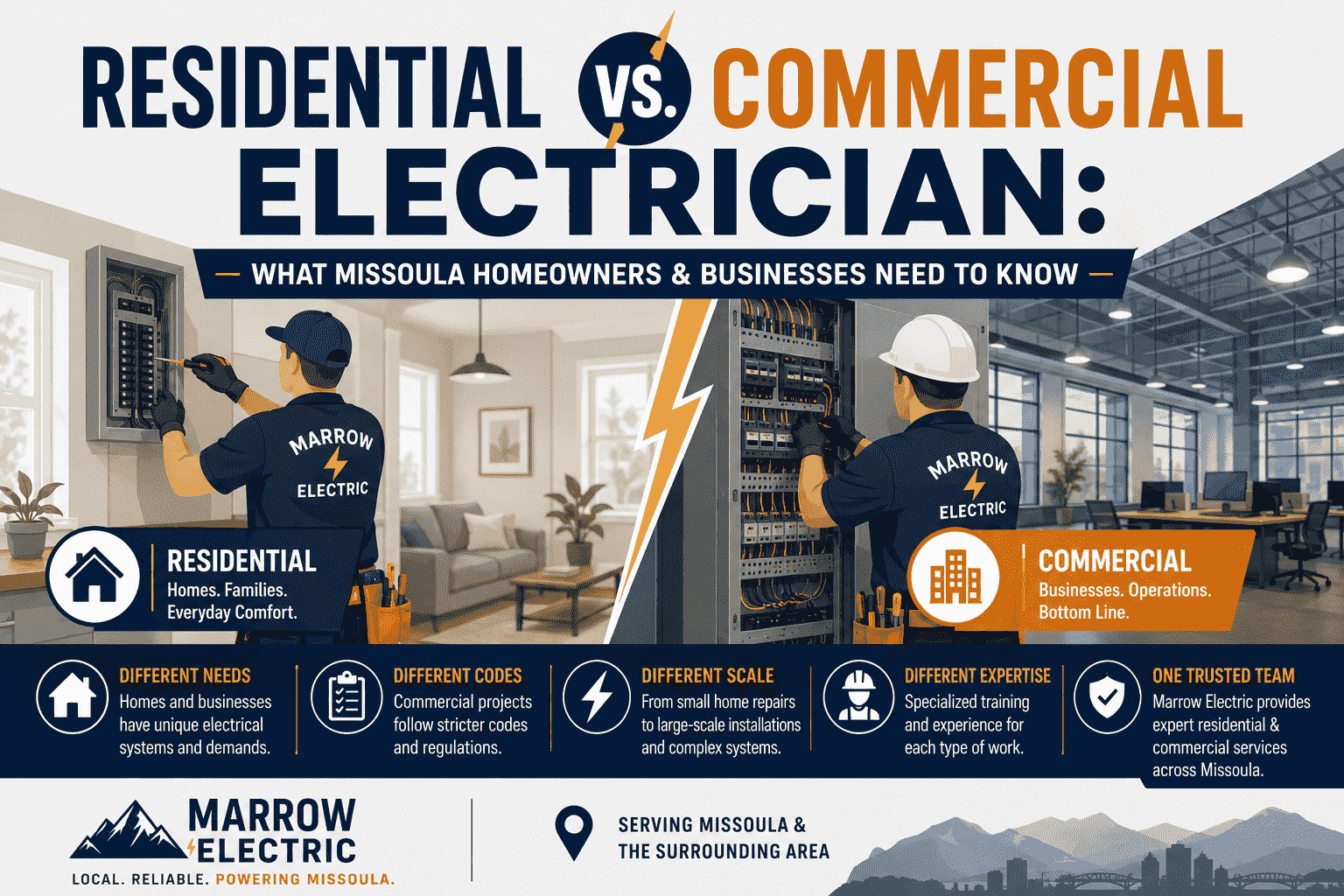
If you’ve ever searched for an “electrician near me” in Missoula, you’ve probably noticed that not every electrician does the same kind of work. Some focus on homes. Others specialize in offices, retail spaces, and industrial buildings. And a lot of electrical companies, including Marrow Electric, handle both — but that doesn’t mean the jobs themselves are interchangeable.
Understanding the difference between a residential electrician and a commercial electrician can save you time, money, and a lot of frustration when you’re trying to hire the right person for the job. Here’s what sets them apart, and how to know which one you need.
What Does a Residential Electrician Do?
A residential electrician works on homes — single-family houses, condos, townhomes, and apartments. In Missoula and the surrounding Bitterroot Valley, that typically includes:
- Wiring and rewiring older homes
- Panel upgrades and breaker replacements
- Installing and repairing outlets, switches, and lighting
- Troubleshooting flickering lights or tripped breakers
- Ceiling fan and appliance installation
- EV charger installation
- Whole-home surge protection
Residential electrical systems are generally smaller in scale and run on lower voltage than commercial systems. That doesn’t make the work simple, though — Missoula has plenty of older housing stock, and older wiring, knob-and-tube systems, and outdated panels all require an electrician who knows how to bring a home up to current code safely.
What Does a Commercial Electrician Do?
A commercial electrician in Missoula works on larger, more complex systems found in office buildings, retail stores, restaurants, warehouses, and industrial facilities. This work usually involves:
- Three-phase power systems
- Larger electrical panels and higher voltage loads
- Code compliance for commercial occupancy
- Emergency lighting and exit sign systems
- Wiring for large-scale HVAC and equipment
- New construction and tenant build-outs
- Ongoing maintenance contracts for building systems
Commercial jobs tend to involve more planning, more code requirements, and more coordination with other trades and inspectors. A commercial electrician in Missoula also needs to understand the specific permitting and inspection process for local commercial projects, which can differ significantly from a residential permit pull.
Key Differences at a Glance
Scale and complexity: Commercial buildings draw far more power and often require three-phase electrical systems, while most homes run on standard single-phase service.
Code requirements: Commercial spaces are held to stricter fire, safety, and accessibility codes, including requirements for emergency lighting and exit signage that residential properties don’t need.
Scheduling: Commercial electrical work often has to happen outside normal business hours to avoid disrupting operations, while residential work is usually scheduled during the day.
Equipment: Commercial electricians typically work with larger conduit, heavier-gauge wire, and industrial-grade panels compared to the materials used in a home.
Why the Distinction Matters When You’re Hiring
Hiring an electrician who mainly does small residential repairs for a commercial tenant build-out — or the reverse — can lead to delays, code violations, or work that has to be redone. A qualified electrician should be upfront about their experience with your specific type of project, and in Missoula, an electrical contractor who handles both residential and commercial work should be able to explain exactly how the two differ for your situation before they ever start work.
Frequently Asked Questions
Can the same electrician handle both residential and commercial work?
Some can, but it depends on their training and licensing. Many electricians specialize in one area, while others — like Marrow Electric — are equipped to handle both residential repairs and commercial projects.
Is commercial electrical work more expensive than residential work?
Generally, yes. Commercial projects involve larger systems, stricter code requirements, and more complex planning, which typically means a higher cost than a comparable residential job.
Do I need a licensed electrician for small repairs in my home?
Yes. Even small electrical repairs, like replacing an outlet or fixing a flickering light, should be handled by a licensed electrician to make sure the work is done safely and up to code.
How do I know if my business needs an electrical inspection?
If you’re leasing a new space, planning a build-out, or haven’t had an inspection in several years, it’s worth scheduling one. Missoula commercial properties are subject to fire and safety codes that residential properties aren’t.
What’s the difference between single-phase and three-phase power?
Single-phase power is standard in most homes and is sufficient for typical household needs. Three-phase power delivers electricity more efficiently and is used in commercial and industrial settings to run heavier equipment.
How often should older Missoula homes have their wiring checked?
If your home was built before the 1980s, it’s a good idea to have the wiring inspected every few years, especially if you notice flickering lights, warm outlets, or breakers that trip often.
Does Marrow Electric offer emergency electrical services?
Yes, for both residential and commercial customers. Electrical issues like exposed wiring, burning smells, or a total loss of power shouldn’t wait for a scheduled appointment.
Why Choose Marrow Electric
Missoula homeowners and businesses have plenty of electricians to choose from, but not all of them work across both residential and commercial projects the way Marrow Electric does. A few reasons local customers choose us:
- Local knowledge: We understand the mix of older housing stock and newer commercial development around Missoula and the Bitterroot Valley, and we know what that means for code compliance and wiring conditions.
- Range of experience: From a single outlet repair to a commercial build-out, our team has the licensing and background to handle the job correctly the first time.
- Straightforward communication: We’ll tell you plainly whether your project is a residential fix or a commercial-grade job, and what that means for cost and timeline, before any work begins.
- Reliability: We show up when we say we will and stand behind the work we do.
If you’re not sure which type of service your project falls under, give us a call — we’re happy to talk through what you’re dealing with and point you in the right direction.