
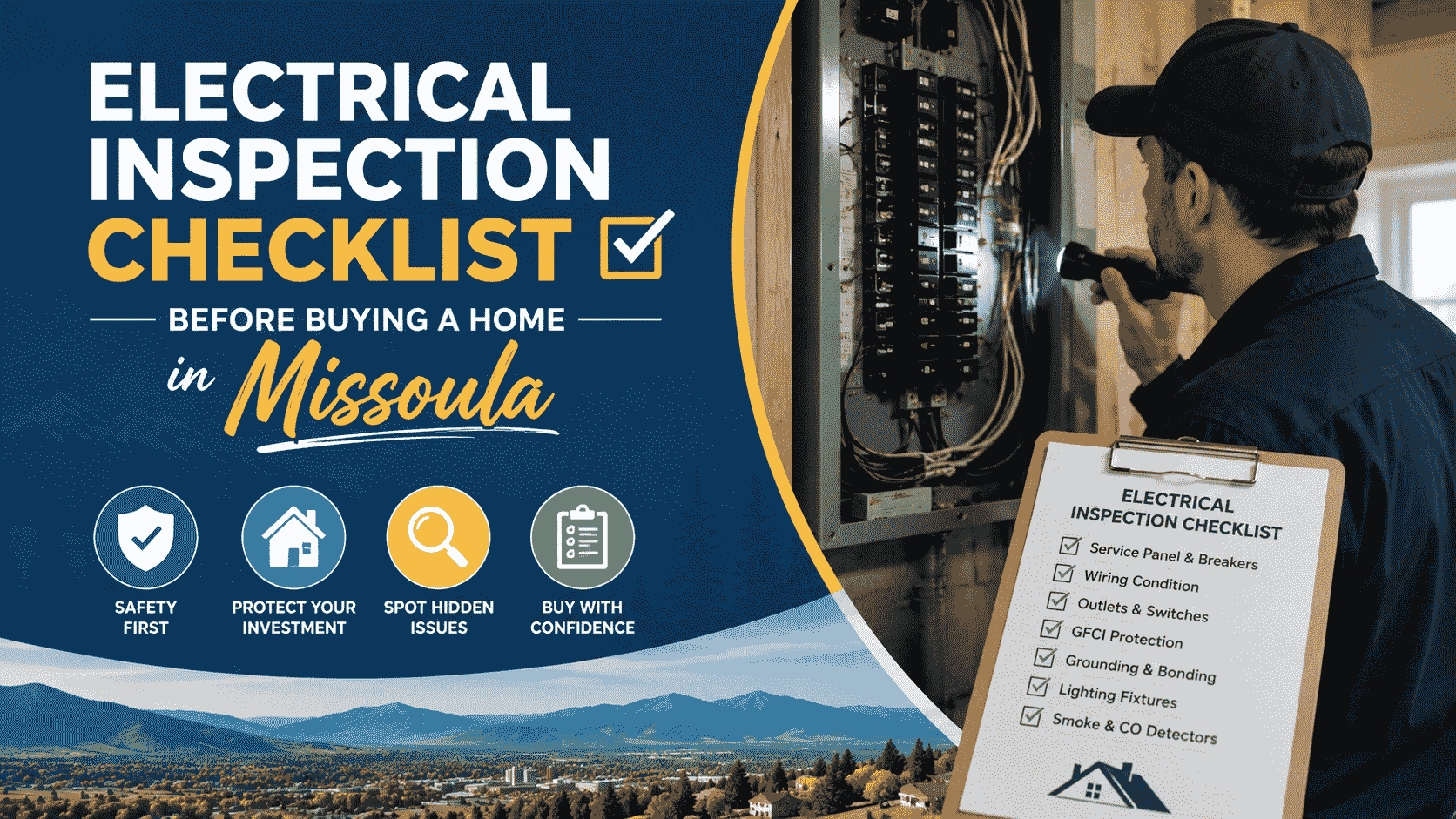
Missoula’s housing stock spans everything from century-old bungalows in the University District to new builds out toward Bitterroot Valley, and the electrical systems inside those homes vary just as widely. A standard home inspection will flag obvious red flags, an exposed wire, a missing cover plate, but general inspectors aren’t licensed electricians, and electrical systems are one of the areas where a surface-level look can miss expensive problems. A dedicated home electrical inspection in Missoula, performed by a licensed electrician before you close, gives buyers and their realtors a much clearer picture of what they’re actually purchasing.
This checklist walks through what an electrician evaluates during a pre-purchase inspection, why each item matters, and when to schedule it in your closing timeline.
Why a General Home Inspection Isn’t Enough
Most general home inspectors check that outlets work, panels are labeled, and nothing looks obviously unsafe. That’s a reasonable baseline, but it doesn’t cover the deeper diagnostics a licensed electrician performs, things like verifying panel capacity against the home’s actual electrical load, tracing aluminum branch wiring behind walls, or confirming that grounding is intact throughout the system rather than just at the panel. In a market like Missoula, where homes range from 1920s originals to homes rewired (or not rewired) multiple times over decades, that distinction matters a lot.
A pre-purchase electrical inspection isn’t about creating problems in a deal, it’s about knowing what you’re negotiating with. Buyers who go in with a clear electrical picture are in a much stronger position, whether that means requesting repairs, negotiating a credit, or simply budgeting accurately for what’s ahead.
What a Licensed Electrician Checks
Panel Age and Capacity
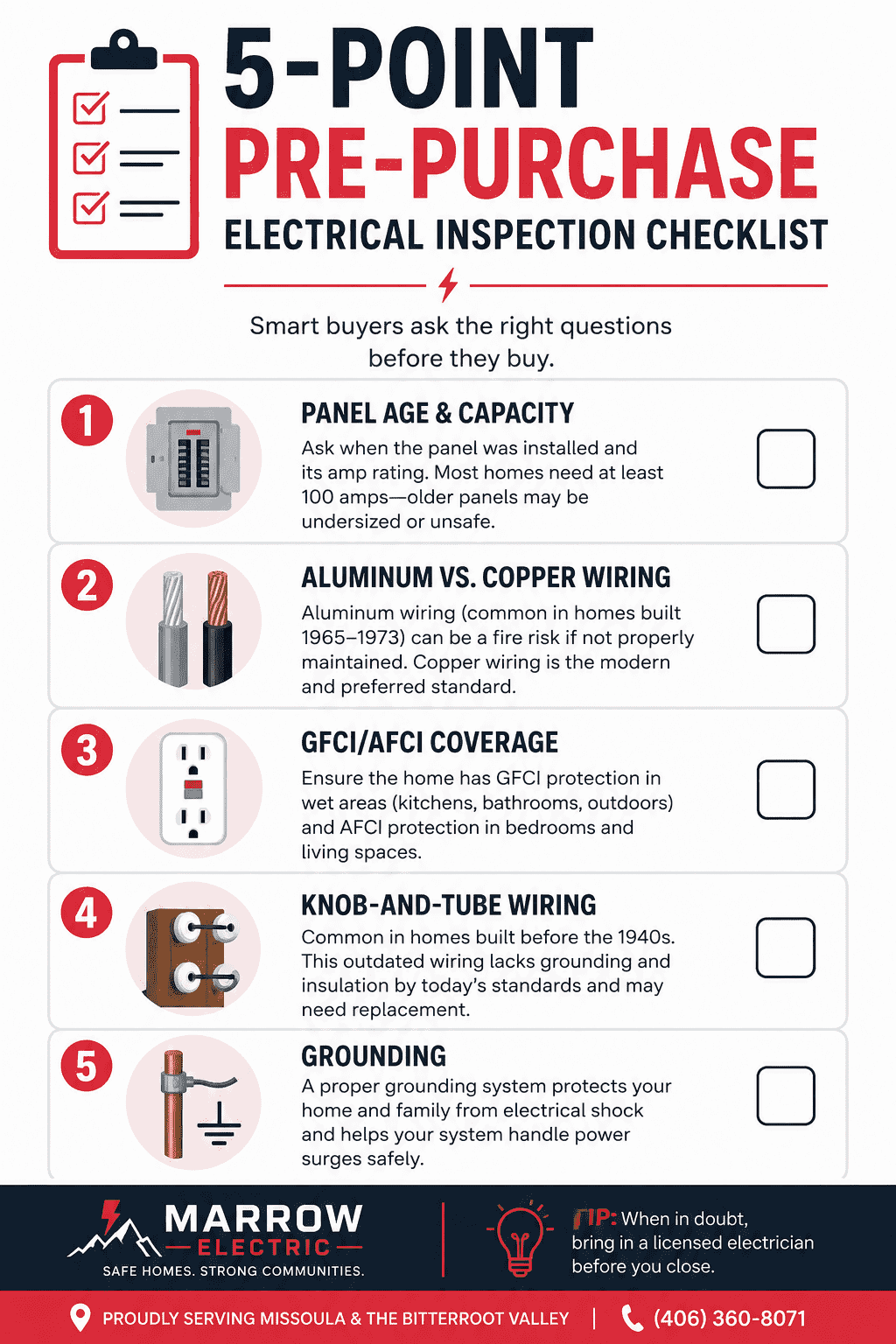
The electrical panel is the starting point for almost every inspection. An electrician will check the panel’s age, manufacturer, and amperage rating against the home’s current and likely future electrical demand. Many older Missoula homes still run on 60- or 100-amp service, which was standard decades ago but is often undersized for a modern household running central air, an EV charger, or a home office setup. Certain older panel brands are also known for reliability and safety issues and are frequently flagged for replacement regardless of age. If a panel does need updating, see our electrical panel upgrade guide for what that project typically involves.
Need an Electrician?
Reliable electrical service in Stevensville and the Bitterroot Valley.
Call Marrow Electric65 Goose Ln, Stevensville, MT 59870
Aluminum vs. Copper Wiring
Homes built or renovated in the 1960s and 1970s sometimes used aluminum branch circuit wiring instead of copper, largely due to copper shortages and cost at the time. Aluminum wiring isn’t automatically dangerous, but it behaves differently than copper at connection points, it expands and contracts more with temperature changes, which can loosen connections over time and create a fire risk if it hasn’t been properly treated with approved connectors or anti-oxidant compound. An electrician will identify whether a home has aluminum wiring and assess whether prior remediation work was done correctly.
GFCI and AFCI Coverage
Ground-fault circuit interrupter (GFCI) protection is required in areas prone to moisture, kitchens, bathrooms, garages, and exterior outlets, while arc-fault circuit interrupter (AFCI) protection is intended to catch dangerous arcing in bedroom and living space wiring. Many older homes were never updated to include either, especially if they haven’t undergone a permitted renovation. During an inspection, an electrician tests existing GFCI/AFCI devices for proper function and identifies where coverage is missing relative to current code expectations.
Knob-and-Tube Wiring in Older Missoula Homes
Missoula has no shortage of homes built in the early-to-mid 1900s. Some still contain original knob-and-tube wiring, either throughout the home or in isolated areas such as an attic or addition.
Knob-and-tube wiring wasn’t inherently unsafe when it was installed. However, it wasn’t designed for modern electrical loads and lacks a grounding conductor. It can also become a serious liability when it has been spliced over the years or buried under insulation.
Knob-and-tube wiring can also affect homeowners insurance. Some insurance companies may decline coverage or charge higher premiums for homes with this type of older wiring.
A pre-purchase electrical inspection can confirm whether knob-and-tube wiring is present, how much of the home it covers, and what it may take to replace it. For homes where it covers a significant portion of the wiring, whole-house rewiring is often the most practical long-term solution.
Grounding
A properly grounded electrical system protects both the home’s wiring and the people using it. An electrician will verify that the system has a continuous, code-compliant ground path, not just at the panel, but carried through to outlets and fixtures throughout the house. Ungrounded outlets are common in older homes that predate modern grounding requirements, and while a two-prong outlet isn’t automatically a crisis, it’s worth knowing about before you move in appliances and electronics that expect a grounded circuit.
When to Schedule the Inspection Relative to Closing
Timing matters. The ideal window for a pre-purchase electrical inspection is right after your offer is accepted and during the general home inspection contingency period, typically within the first 7 to 10 days of your purchase agreement, depending on the timeline your realtor negotiated. Scheduling it during this window means:
- You still have room to negotiate repairs, credits, or price adjustments before the contingency deadline.
- Your electrician’s findings can be shared directly with the seller’s side if issues come up.
- You avoid the pressure of discovering major electrical problems after you’re already locked into closing.
Waiting until after closing to find out a home needs a full panel upgrade or knob-and-tube remediation puts you in a much weaker position, you own the problem outright with no leverage to negotiate. If your closing timeline is tight, let your realtor know early that you want an electrical inspection built into the schedule; most licensed electricians in the Missoula area can accommodate a pre-purchase inspection within a few days of being contacted.
What Happens After the Inspection
Once the inspection is complete, you’ll get a clear rundown of what’s in good shape, what needs attention soon, and what’s an immediate safety concern. This isn’t just useful for the purchase negotiation, it’s a practical roadmap for the home’s first year or two of ownership. Some findings (like a missing GFCI outlet) are minor and inexpensive to fix. Others (like a full panel upgrade or knob-and-tube replacement) are bigger projects worth budgeting for or negotiating into the deal, our guide to electrician costs in Missoula can help you get a general sense of pricing while you plan.
If electrical issues do turn up, Marrow Electric’s electrical service and troubleshooting team can walk through repair options and provide estimates so you know exactly what you’re working with before you’re committed to the purchase. It’s also worth knowing the common signs a home needs electrical repair so you can spot issues yourself between now and your inspection date.
Frequently Asked Questions
How much does a pre-purchase electrical inspection cost in Missoula?
Pricing depends on the size of the home and how much of the system needs to be accessed (attic, crawlspace, panel, etc.), but it’s a small cost relative to the negotiating leverage or peace of mind it provides. Contact Marrow Electric for a quote specific to the property.
Is a pre-purchase electrical inspection the same as the home inspector’s electrical check?
No. A general home inspector does a broad visual pass across the entire house, while a licensed electrician performs a focused, code-level evaluation of the panel, wiring type, grounding, and safety devices, the kind of detail a general inspection isn’t equipped to catch.
Do I need an electrical inspection if the home is newer?
It’s still worth doing, especially if the home has had any DIY electrical work, additions, or a permit history that’s unclear. Newer doesn’t always mean problem-free, and it’s a relatively low-cost way to confirm everything was done to code.
Can I use the inspection findings to negotiate with the seller?
Yes. A written report from a licensed electrician is often treated the same way as findings from a general home inspector, it can support a request for repairs, a credit, or a price adjustment, depending on what your purchase agreement allows.
What if the inspection finds knob-and-tube wiring or an outdated panel?
That doesn’t necessarily mean walking away from the home, it means going in with accurate information. Many buyers negotiate a credit and plan the upgrade shortly after move-in. Marrow Electric can provide an estimate for the work so you know the real cost before you finalize anything.
Buying a Home in Missoula? Get the Electrical Checked First
An electrical system is one of the least visible parts of a home and one of the most expensive to get wrong. Before you close on a home in Missoula or the Bitterroot Valley, a licensed electrician’s inspection gives you the facts you need, not guesses, about the panel, wiring, grounding, and safety systems you’re about to own.
Book a pre-purchase electrical inspection with Marrow Electric before your contingency period closes, and go into your closing with a clear picture of exactly what you’re buying. Serving both the Missoula and Hamilton/Bitterroot Valley areas.